
The Forensic Scene: When Water Becomes a Weapon
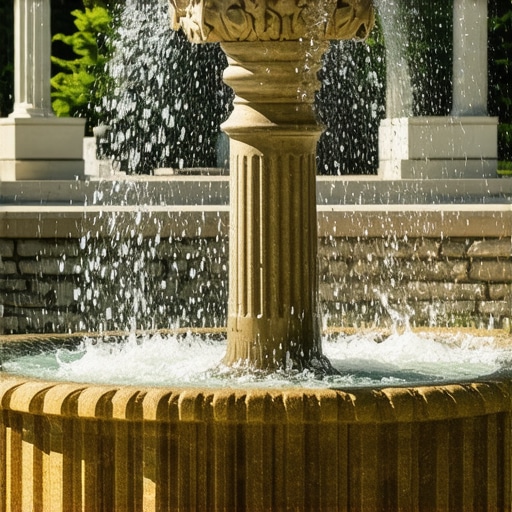
The homeowner told me it was just a bit of green slime on the pedestal of their custom limestone feature. They’d been scrubbing it with a wire brush and dish soap for six months, wondering why it kept coming back thicker and darker. But when I put my scope inside the base of that $40,000 fountain, I saw the real horror: the structural steel was rusted to dust, and the interior concrete masonry unit restoration was failing because of hydrostatic pressure and biological rot. This wasn’t just an aesthetic issue; the stone was literally being digested from the inside out by acids produced by the algae. Most folks see a fountain as a relaxing centerpiece, but as a third-generation mason, I see a thermal-dynamic battlefield where water, stone, and biology are in a constant state of war. If you don’t understand the ‘tooth’ of your masonry or the suction rate of your stone, you’re not cleaning; you’re just accelerating the decay.
“Water penetration is the single greatest threat to masonry durability, leading to efflorescence, spalling, and biological growth that compromises structural integrity.” – BIA Technical Note 27
The Biology of Decay: Why Algae is a Structural Threat
We need to stop talking about algae as if it’s just a stain. In the context of an outdoor kitchen masonry build or a decorative fountain, algae—specifically cyanobacteria and various chlorophyta species—is a biological agent that creates a micro-environment on your masonry surface. These organisms hold moisture against the stone, preventing the natural ‘breathing’ process. In the high-heat environments of the South, this trapped moisture leads to a phenomenon called ‘flash setting’ of mineral deposits. When the sun hits that damp stone, the water evaporates so rapidly that it leaves behind a hard crust of calcium and salt, often called efflorescence, which provides an even better anchor for the next generation of algae. This cycle creates honeycombing in the mortar joints, where the ‘mud’ becomes porous and brittle, losing its structural ‘bite.’ If you’re dealing with brick column repair near a water feature, you’ll likely find that the algae has migrated into the soldier course at the base, where the capillary suction is highest.
The Chemistry of the Clean: Beyond the Pressure Washer
The first instinct of every ‘handyman special’ contractor is to crank the pressure washer to 4,000 PSI and blast the stone. That is a death sentence for high-quality masonry. You are essentially sandblasting the protective ‘fire skin’ off the brick and opening up the pores of the concrete. Instead, you must understand the pH balance of the stone. For concrete flatwork services and stone features, we use a biological wash that kills the spores at the root without etching the surface. You ‘butter’ the cleaning agent onto the surface, let it dwell, and then use a soft-bristled brush to agitate. We are looking for the ‘ring’ of the stone—a dense, healthy sound—not the dull thud of waterlogged material. When performing masonry joint sand repair during the cleaning process, you must ensure the existing sand isn’t infested with microscopic spores, or your new ‘mud’ will turn green within a week. High-performance mortar mixes are essential here; they need to be dense enough to resist water but flexible enough to handle the thermal expansion of a wall sitting in the 100-degree sun.
“Mortar should be designed to be sacrificial to the masonry units it binds, ensuring that stresses are relieved through the joints rather than the masonry face.” – ASTM C270 Standard Specification for Mortar
The Physics of Sealing: Silanes, Siloxanes, and Breathability
Once the masonry is forensic-level clean, the sealing process begins. This is where most people fail by using a ‘lick-and-stick’ film-forming sealer. In hot climates, a film-forming sealer will trap moisture behind the stone. When that water tries to escape as vapor, it can’t. The pressure builds up until it pops the face of the stone off—a process known as spalling. A master mason uses penetrating sealers, specifically silanes or siloxanes. These molecules are small enough to enter the ‘tooth’ of the masonry and bond chemically with the silica in the stone. They don’t form a plastic sheet; they change the surface tension of the pores. Water beads off the surface, but vapor can still pass through. This is the same logic used in green roofing masonry integration and chimney cap replacement—you have to let the structure breathe or it will suffocate. If you’re working on a retaining wall geogrid installation, you also have to ensure the sealer doesn’t interfere with the drainage plane behind the wall. The physics of water management is simple: you either control the water, or the water controls you.
The Long Game: Maintenance and Structural Integrity
Cleaning a fountain is part of a larger ecosystem of masonry health. You cannot have a clean fountain if your foundation is sinking or if your brick columns are absorbing ground moisture. I’ve seen concrete masonry unit restoration projects fail because the contractor didn’t address the cold joint where the new work met the old. Every time you ‘slicker’ a joint or apply a new coat of sealer, you are adding a layer of protection to your investment. For those with complex outdoor kitchen masonry builds, the grease from cooking can react with the algae-cleaning chemicals, creating a soap-like residue that is nearly impossible to remove. This is why a professional forensic approach is required. Do it once, or do it twice—the choice is yours. A third-generation mason knows that the ‘mud’ we mix today is meant to stand for a hundred years, but only if we respect the chemistry of the stone and the physics of the water.