
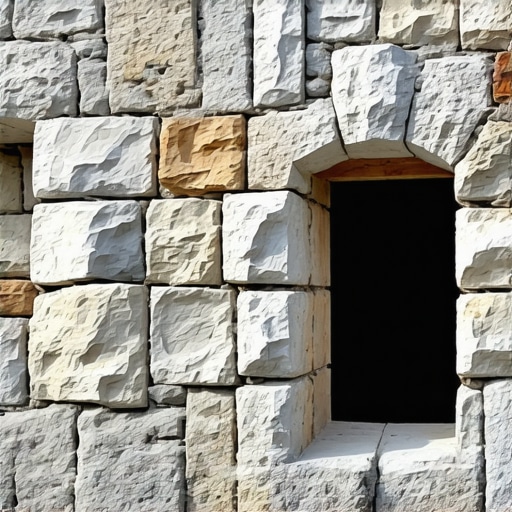
The Ghost in the Gable: A Forensic Reality Check
The homeowner thought it was just a hairline crack, a minor blemish on the face of a million-dollar Tudor estate. But when I put my scope inside that fissure, the reality was grim: the structural steel lintel was rusted to dust, and the stone facade was essentially hanging by a prayer. This wasn’t a job for a weekend warrior with a bag of pre-mix. This required a forensic understanding of how stone, mortar, and steel interact over decades of thermal cycles. I’ve spent thirty years dissecting failures like this, and if there is one thing I’ve learned, it’s that the ‘mud’ you use dictates whether a repair lasts a lifetime or just until the check clears. In this case, the previous ‘repair’ had used a standard Portland-heavy mix that lacked any internal cohesion. It had snapped under the first sign of structural movement. This is precisely why we’ve moved toward fiber-reinforced mortars for any serious stone facade restoration. It’s not about making the mortar harder; it’s about making it smarter.
The Physics of Failure: Why Compression Isn’t Enough
In the world of masonry, we often obsess over compressive strength. We want a mortar that can take the weight. But structural stone repair is rarely about weight alone; it’s about tension, shear, and the relentless movement of a building as it breathes. When you are performing structural repointing or a complex brick infill panel repair, the mortar acts as the shock absorber for the entire assembly. Standard mortars are brittle. Under the stress of thermal expansion or minor settlement, they develop micro-cracks. Once a micro-crack forms, capillary action draws water into the heart of the wall. In northern climates, that water freezes, expands by 9%, and begins the process of spalling, eventually popping the face right off a hand-carved limestone header.
“Water penetration is the single greatest threat to masonry durability. The selection of mortar must account for the differential movement between the masonry units and the mortar itself.” – BIA Technical Note 7
Fiber-reinforced mortars change the game by introducing thousands of microscopic ‘bridges’ across the cementitious matrix. Whether we are using alkali-resistant (AR) glass fibers, polypropylene, or even carbon fibers, these additives serve to arrest crack propagation at the molecular level. Instead of one large, catastrophic crack that allows water to pour into the substrate, the fibers distribute the energy, resulting in ‘micro-cracking’ that is invisible to the naked eye and keeps the joint’s integrity intact. This is the difference between a wall that stands for a century and one that requires a masonry damage assessment every five years.
Micro-Zoom: The Chemistry of the Interfacial Transition Zone
To understand why we butter our stones with fiber-reinforced mud, we have to look at the Interfacial Transition Zone (ITZ). This is the microscopic area where the cement paste meets the aggregate—and in our case, the fiber. In a standard mix, the ITZ is the weakest link. It’s prone to shrinkage as the water hydrates out of the mix. Fiber-reinforcement increases the ‘tooth’ of the mortar. As the hydration process occurs, the cement crystals grow around the fibers, creating a mechanical bond that resists the natural tendency of the mud to pull away from the stone as it dries. This is critical when dealing with stone facade restoration where the stones themselves may have low porosity. If the mortar ‘burns’ or dries too fast—a common problem in hot climates—the bond is lost before it even begins. By using fibers, we increase the water retention of the mix, allowing for a slower, more complete hydration. This ensures that the ‘suction’ of the stone doesn’t rob the mortar of the moisture it needs to crystallize properly. We aren’t just filling a hole; we are weaving a new structural fabric into the existing masonry.
The Art of the Joint: From Soldier Courses to Curved Walls
When I’m out on a hawk and trowel, working on tuckpointing curved walls, the geometry adds a whole new layer of stress. A curved wall creates varying pressures across the joint profile. If you don’t have the right tensile strength in your mud, the joints on the convex side will eventually gape. Using tuckpointing machine services can speed up the removal of old, failing mortar, but the replacement must be precise. We often use various brickwork pointing styles—like a weather-struck joint or a grapevine joint—to shed water, but those sharp edges are prone to chipping if the mortar is too brittle. The fibers provide the edge-retention needed to maintain those crisp lines. For a historic restoration, we might even blend these fibers into a lime-rich Type O mortar. This maintains the ‘sacrificial’ nature of the joint—ensuring the mortar is softer than the historic brick—while giving it the internal strength to stay put during a freeze-thaw cycle.
“The mortar should always be weaker than the masonry units to ensure that any stress-induced cracking occurs in the replaceable mortar joints rather than the masonry units themselves.” – ASTM C270 Standard Specification for Mortar
This principle is the bedrock of forensic masonry. If you use a mortar that is too hard, like a modern Type S on 19th-century brick, you’ll end up with ‘honeycombing’ or the face of the brick blowing off because the moisture couldn’t escape through the joints.
Advanced Assessment: Drones and Self-Leveling Lifts
Modern forensic masonry has moved beyond just tapping bricks with a slicker. We now employ drone chimney inspections to see what the human eye can’t reach without $10,000 in scaffolding. These drones can spot the early signs of a failing soldier course or a chimney crown that has lost its shedding ability. When we identify structural issues high up, we often utilize self-leveling masonry lifts to provide a stable platform for the delicate work of stone facade restoration. These lifts allow us to maintain a constant pressure when injecting fiber-reinforced grouts into deep voids. This is often paired with foundation waterproofing, as most masonry issues start from the ground up. If the foundation is heaving due to hydrostatic pressure, no amount of tuckpointing will save the upper floors. We have to address the soil-to-structure interaction, often using helical piers or deep-soil injection before we even think about the aesthetics of the brickwork.