
The Tragedy of the Mismatched Facade
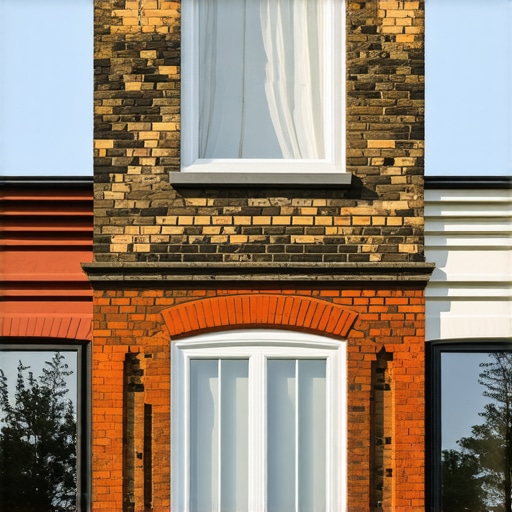
I recently walked onto a job site in an old coastal district where a stunning 1890s brick manor was being ‘restored.’ My heart sank. The contractor, likely more used to modern suburban siding than 19th-century clay, had filled the joints with a harsh, battleship-gray Portland cement. The original bricks, soft and hand-molded, were already starting to ‘spall’—the faces were popping off like scabs. This is the ultimate sin in our trade. In my three decades of forensic masonry, I have seen more historic buildings destroyed by ‘repair’ than by time itself. When you use a hard, modern mortar on a soft, historic brick, you aren’t fixing it; you are signing its death warrant. The mortar must always be the ‘sacrificial’ element. It must be softer than the masonry units so that when the earth moves or the seasons change, the mortar takes the stress, not the brick.
The Lead Mason’s Lesson
Years ago, I worked under a man named Elias who had spent fifty years on scaffolding. He didn’t use color charts. He would take a sample of the original mortar, crush it in his palm, and blow away the dust to look at the ‘heart’ of the aggregate. If the sand didn’t have the right ‘tooth’ or the specific iron-oxide tint of the local riverbed, he’d send the truck back. He taught me that mortar isn’t just glue; it is a breathing, living lung for the building. If you choke that lung with modern chemicals, the building suffocates. This is why professional mortar matching services are not a luxury—they are a structural necessity for any historic brick salvage project.
“Water penetration is the single greatest threat to masonry durability. The mortar joint must be designed to manage this moisture, allowing it to escape through the joint rather than through the masonry unit.” – BIA Technical Note 7
The Physics of the Sacrificial Joint
In historic restoration, we operate on the principle of vapor permeability. Before 1940, most buildings were constructed with lime-rich mortars. These mixes are low in compressive strength but high in flexibility and ‘breathability.’ When rain hits a wall, the moisture is sucked into the masonry. In a lime-mortar system, that moisture evaporates back out through the joints. However, modern Portland cement is nearly waterproof. If you ‘butter’ a joint with it, the water gets trapped behind the hard cement. When the temperature drops and that water freezes, it expands by roughly 9% in volume. Since it can’t push through the cement, it pushes through the face of the brick, causing catastrophic spalling. This is the same physics that leads to a failing retaining wall repair job when the drainage isn’t handled correctly; the hydrostatic pressure simply finds the path of least resistance.
Anatomy of a Proper Match
To achieve a perfect match, we don’t just look at color. We perform a forensic acid digestion. We take a sample of the historic ‘mud,’ dissolve the binder in hydrochloric acid, and analyze what’s left: the aggregate. The sand tells the story. Was it sharp-angled pit sand or rounded river sand? Was there crushed oyster shell used as a lime source? We then replicate this ‘gradation’ of sand. Using the right tuckpointing tools for DIY might seem tempting, but without a slicker or a hawk and the right feel for the suction of the brick, you will likely create ‘honeycombing’ in the joint, which invites water. For high-stakes areas like brick quoin repair, where the corners of the building bear the most structural stress, the mortar chemistry must be exact to prevent differential settling.
The Chimney and the Smokestack: High-Heat Forensic
The rules change when we move from the facade to the flue. A chimney flue liner installation or a commercial smokestack repair requires a deep understanding of thermal expansion. Unlike a standard wall, these structures face extreme temperature gradients. This is where fire-rated masonry installation becomes critical. You cannot use standard mortar here; you need refractory mortars that can withstand 2,000 degrees without ‘vitrifying’ or cracking. Furthermore, a chimney cap replacement is often the first line of defense. If the cap is cracked, water enters the vertical core of the masonry, leading to internal rot that is invisible from the ground until the whole stack leans. Even the stone coping installation on the parapet walls must be pitched perfectly to shed water away from the face of the building, preventing the ‘black crust’ of gypsum that forms when sulfur dioxide reacts with limestone.
“Mortar shall be specified by proportion or by property. For restoration of historic structures, the use of Type O or lime-putty mortar is often required to ensure compatibility with existing materials.” – ASTM C270 Standards
The Craft of Repointing
When we begin the actual work, the ‘grinding out’ phase is where most amateurs fail. You never use a circular saw on vertical joints of historic brick; you’ll overcut and scar the ‘sleepers.’ We use small pneumatic chisels to carefully remove the failing mud. Then, we ‘pre-hydrate’ the wall. If the brick is bone-dry, it will suck the moisture out of the new mortar too fast—a ‘flash set’—preventing the chemical hydration of the lime and leaving you with a brittle, dusty mess. We apply the mortar in ‘lifts’ or stages, compacting it firmly into the back of the joint to eliminate voids. This is the only way to ensure the building stands for another century. Whether you are dealing with a failing retaining wall repair or a delicate brick quoin repair, the goal is the same: permanency through compatibility.