
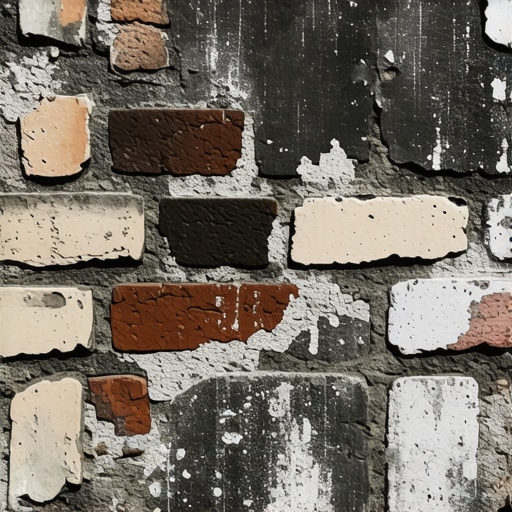
The Forensic Reality of the Facade
I was standing on a suspended scaffold seventy feet above a city street, staring at a commercial smokestack that looked solid from the sidewalk. To the owner, it was just a chimney. To me, it was a ticking time bomb. I took my hammer and tapped a few units. Instead of the sharp, high-pitched ping of healthy vitrified clay, I heard a dull, hollow thud. When I pulled a sample, the structural steel within the masonry was not just rusted—it had undergone such severe oxidation that it had expanded to three times its original thickness, acting like a wedge that was slowly splitting the stack from the inside out. This is the reality of forensic masonry: by the time you see the crack on the outside, the war inside has already been lost.
The Physics of the Freeze-Thaw War
In regions where the thermometer bounces across the freezing mark, moisture is not just a nuisance; it is a demolition crew. We are talking about the basic physics of the 9% expansion. When liquid water penetrates the tuckpointing brick walls use to maintain their integrity, it fills the microscopic pore structure of the brick. As that water turns to ice, it exerts internal pressure that can exceed 30,000 psi. If the mortar is too hard—a common sin of the modern ‘handyman’ using high-strength Portland cement on old soft-fired clay—the brick has nowhere to go. It spalls. The face of the brick literally pops off, leaving the soft, ‘salmon’ interior exposed to the elements. This is why cracked brick wall repair requires a deep understanding of the material’s ‘tooth’ and its ability to breathe.
“Water penetration is the single greatest threat to masonry durability.” – BIA Technical Note 7
Micro-Zooming: The Chemistry of the Mud
Let’s talk about the ‘mud.’ In the masonry trade, we don’t just ‘mix cement.’ We balance chemistry. For commercial smokestack repair or historic restoration, we look at the carbonation process of lime. Traditional lime mortar doesn’t just ‘dry’; it reacts with atmospheric CO2 to turn back into limestone over decades. This creates a flexible, self-healing matrix. When a building settles, the lime mortar develops micro-cracks that actually reseal themselves when rainwater dissolves a bit of the free lime and redeposits it. Modern mortars, however, are often too brittle. When you are dealing with foundation wall bowing repair, you aren’t just fighting the soil; you’re fighting the hydrostatic pressure of water trapped in the backfill. If that water can’t move through the wall via vapor transmission, it will push the entire structure inward until the masonry birdsmouth cuts at the floor joists begin to slip.
The Lintel and the Crown: Critical Failure Points
One of the most frequent forensic scenes I encounter involves brick lintel replacement. The lintel—that steel angle iron holding up the bricks over a window or door—is often the victim of ‘lick-and-stick’ mentalities. Without proper flashing and weep holes, moisture sits on the steel. As it rusts, the ‘jacking’ force lifts the courses of brick above it, creating the classic stair-step crack. Similarly, a failing chimney crown repair is often the catalyst for total system failure. The crown should be a cast-in-place concrete wash with a drip edge, but I usually find it’s just a thin smear of mortar—a ‘buttering’ of the top course that cracks within a season, funneling water directly into the flue tiles and the heart of the masonry stack.
Breathability and Modern Integration
We see a lot of green roofing masonry integration these days. While beautiful, these systems introduce a massive amount of constant moisture at the roofline. If the masonry waterproofing solutions used aren’t vapor-permeable, you are essentially gift-wrapping your building in plastic. The wall needs to breathe. If you trap vapor inside, it will find its way to the cold side of the wall, condense, and start the rot. This leads to brick veneer detachment repair projects where the corrugated wall ties have simply dissolved, leaving a four-inch thick skin of brick completely unattached to the building’s frame.
“Mortar should always be weaker than the masonry units it binds, acting as a sacrificial element in the system.” – ASTM C270 Standards
The Master Mason’s Process
When we perform tuckpointing brick walls, we don’t just slap new mud over the old. We grind out the joints to a consistent depth, usually 3/4 of an inch, ensuring we have a clean ‘hawk’ to work from. We pre-wet the bricks to manage the ‘suction.’ If the brick is too dry, it sucks the water out of the mortar before the hydration of the tricalcium silicate can complete, leading to a ‘flash set’ that will crumble by next winter. We ‘butter’ the joints, pack them tight to avoid honeycombing, and then use a slicker or jointer tool to strike the joint at the exact moment the mud is ‘thumbprint hard.’ This compaction is what creates the weather-struck seal that keeps the water out while allowing the vapor to escape. It is the difference between a job that lasts five years and one that lasts fifty.