
The Forensic Scene: Why Your Basement is Actually a Swimming Pool
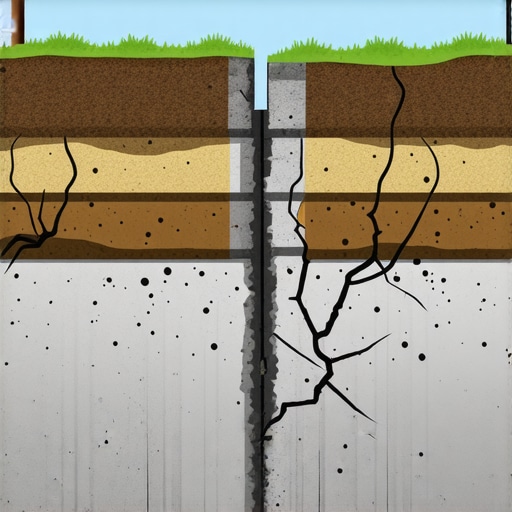
I recently walked into a basement in a neighborhood built over old glacial till—heavy, stubborn clay that holds water like a sponge. The homeowner pointed to a thin, vertical hairline crack and told me it was just a ‘bit of dampness.’ I pulled out my borescope and slipped it into a weep hole I drilled near the footing. What we saw wasn’t just a crack; it was a structural autopsy. Behind that ‘hairline’ surface, the concrete masonry unit restoration was already failing because the internal cells were filled with standing water. The rebar had oxidized so severely it had expanded to twice its original diameter, a phenomenon we call ‘rust bursting,’ which was literally shredding the block from the inside out. This isn’t just bad luck; it’s a failure of physics and a fundamental misunderstanding of how water interacts with masonry.
The Physics of Failure: Hydrostatic Pressure and Pore Water
Most ‘waterproofing’ jobs fail because they are actually just ‘dampproofing.’ There is a massive difference. When you slap a thin coat of black tar on a wall, you’re just putting a raincoat on a guy who’s about to be submerged in a lake. The real enemy is hydrostatic pressure. For every foot of saturated soil against your foundation, you’re looking at an additional 62.4 pounds of pressure per square foot. By the time you get to an eight-foot basement wall, that’s hundreds of pounds of force pushing ‘mud’ and moisture through every microscopic pore in the concrete. If your contractor didn’t account for the retaining wall batter correction or the specific drainage at the footing, that wall is going to bow. We see it all the time: the wall starts to ‘smile’ or ‘frown’—long horizontal cracks that indicate the center of the wall is being pushed inward by the weight of the earth. This is where foundation helical pier installation becomes the only real cure, as we have to bypass the ‘soup’ of the topsoil to find a load-bearing stratum that can actually hold the weight.
“Water penetration is the single greatest threat to masonry durability, leading to the deterioration of both the units and the mortar.” – BIA Technical Note 7
The Freeze-Thaw War: A 9% Expansion Strategy
In our climate, we don’t just deal with liquid water; we deal with the 9% expansion of ice. When water enters a cracked brick wall repair site and the temperature drops, that water expands. It exerts thousands of pounds of internal pressure. This is the root cause of freeze-thaw damage restoration calls. If you have ‘slicked’ your joints with a hard, modern Portland cement over old, soft bricks, you’ve created a trap. The soft brick wants to breathe; the hard cement won’t let it. The ice forms, it has nowhere to go, and it pops the face of the brick right off. This is why tuckpointing cost estimation should never be based on the cheapest bid. Cheap bids use ‘hot’ mixes that are too hard. We use a ‘sacrificial’ mortar—something with a high lime content that is softer than the brick itself, ensuring the mortar fails before the brick does.
The Chemistry of Efflorescence and Capillary Suction
Have you noticed that white, fuzzy powder on your walls? That’s not mold; it’s a chemical alarm bell. Brick efflorescence removal is more than just a cleaning job; it’s a forensic investigation into salt migration. Water moves through masonry via capillary suction—the same way a sponge sucks up a spill. As the water evaporates, it leaves behind dissolved salts. If those salts crystallize inside the pore structure (subflorescence), they can actually blow the masonry apart from within. This is why brick patio restoration and brick paver driveway repair fail when the ‘base’ is wrong. If your pavers are sitting on a bed of fine sand that doesn’t drain, you’ve created a salt-wicking machine that will degrade the pavers in a few seasons. Proper compaction physics and a clear-graded stone base are the only ways to break that capillary bond.
“Efflorescence is a symptom of water moving through the masonry, dissolving salts, and depositing them on the surface. Its presence indicates a moisture problem that must be addressed at the source.” – ASTM C67
The ‘Butter’ and the ‘Mud’: Why Workmanship Trumps Material
I see guys today ‘buttering’ only the edges of the bricks—what we call ‘bird-pecking.’ They want to save on mud, but they’re creating voids. A real mason knows that every head joint and bed joint must be full. Voids are just reservoirs for water. When we do a chimney sweep and repair, we often find ‘honeycombing’ in the concrete crown because the ‘mud’ was too dry when it was poured, or it wasn’t vibrated to remove air pockets. A cold joint—where new concrete is poured against old without a bonding agent—is another gateway for leaks. If you’re looking at concrete masonry unit restoration, you have to treat the wall as a living system. You need ‘tooth’ for the new mortar to grab onto, and you need to manage the ‘suction’ of the brick so it doesn’t pull the water out of the mortar too fast, causing it to ‘flash set’ and crumble. Whether it’s tuckpointing cost estimation or a full foundation overhaul, if you don’t respect the physics of the ‘mud,’ the ‘slicker’ in your hand is just a toy. Do it once, do it right, or you’ll be calling me back in five years to fix a disaster.