The Forensic Scene: When Steel Meets Stone
I was standing in the sub-level of a century-old textile mill, now being converted into overpriced lofts. The homeowner was proud of the exposed I-beams, but my flashlight caught something that made my stomach turn. It wasn’t just a hairline crack; the entire brick column was ‘heaving’ outward like it was trying to breathe. The original contractor had simply shoved a modern steel beam into a hole in the masonry and filled the gaps with high-strength grout. No relief, no movement joint, and certainly no Birdsmouth cut. When the summer heat hit, the steel expanded, acting like a hydraulic ram that split the historic brick salvage right down the center. This is the carnage you see when people treat masonry like it’s a static material. It’s not. It’s a living, breathing assembly that reacts to every degree of temperature change.
The Physics of the Birdsmouth: Why Geometry Saves Foundations
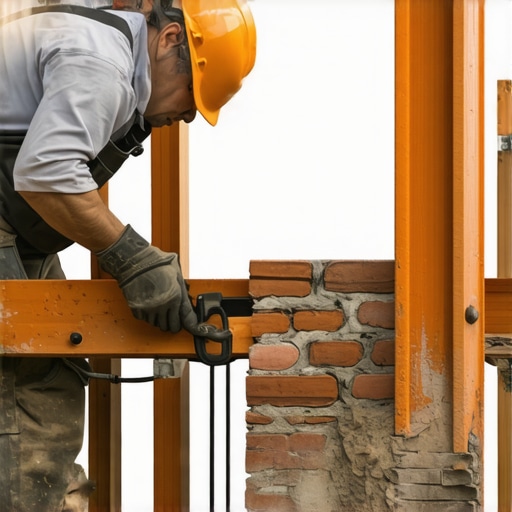
The Birdsmouth technique isn’t just an aesthetic notch; it is a structural necessity when managing the interface between rigid masonry and the thermal elasticity of support beams. In our northern climate, where the freeze-thaw cycle is a relentless enemy, the physics are brutal. Water expands roughly 9% when it turns to ice. If you have a ‘cold joint’ where the beam meets the brick without a proper notch, moisture migrates into that gap. When it freezes, it doesn’t just sit there; it exerts thousands of pounds of pressure, leading to crumbling mortar joint repair jobs that could have been avoided with a single diamond blade. The Birdsmouth cut creates a ‘seat’ that allows the beam to rest on the load-bearing portion of the wall while the ‘wings’ of the brick wrap around the flange, maintaining the visual continuity of the bond without transferring lateral stress directly into the face of the brick.
“Water penetration is the single greatest threat to masonry durability.” – BIA Technical Note 7
Sustainable Block Cutting and the Modern Trowel
In the old days, we’d waste half a pallet of brick trying to get these notches right with a hammer and a bolster. Today, sustainable block cutting practices demand more precision. We use digital twin masonry projects to map out every support beam interface before we even mix the first batch of mud. By laser-scanning the steel, we can pre-cut the notches to within a sixteenth of an inch. This reduces the slurry waste and ensures that the fiber-reinforced mortars we use for the structural bedding are at their optimal thickness. You don’t want a thick bed of mortar under a beam; you want a thin, high-density interface that transfers the load without ‘creeping’ over time. When we butter these bricks, we aren’t just applying adhesive; we are creating a gasket.
Mastering the Cut: A Step-by-Step for the Birdsmouth
First, you have to understand the ‘tooth’ of your material. If you’re working with historic brick salvage, the units are soft and porous. They soak up water like a sponge, which means you have to pre-wet them or they’ll suck the life out of your mortar before it can hydrate. This ‘suction’ is what creates the bond. 1. The Layout: Position the brick against the beam flange. Mark the depth and width of the notch, leaving a 1/4 inch gap for a backer rod and sealant—never grout the steel directly. 2. The Plunge: Using a wet saw, make your vertical cuts first. This is where the sustainable block cutting comes in—use a high-quality diamond blade to prevent chipping. 3. The Relief: Use a series of small parallel cuts (the ‘comb’) to remove the center of the notch. 4. The Finish: Clean the throat of the cut with a masonry chisel until it sits flush. This notch prevents the soldier course from being pushed out of alignment when the building settles.
“Mortar should always be weaker than the masonry units it binds to ensure that stresses are relieved through the joints rather than the bricks themselves.” – ASTM C270 Standards
Structural Repointing and Chimney Flashing Repair
Often, I’m called in to perform foundation inspections where the brick column repair was done poorly decades ago. You’ll see where they used a hard Portland cement on soft 19th-century brick. The brick has spalled, leaving nothing but dust. This is where structural repointing becomes an art form. We grind out the joints to a depth of at least one inch, using a slicker to pack in new, lime-based mortar that matches the original ‘breathability.’ If this interface is near a roofline, chimney flashing repair must be integrated into the Birdsmouth cuts to ensure that water running down the beam is redirected away from the foundation. A chimney rebuild service that ignores the Birdsmouth at the support junctions is just setting the homeowner up for a foundation failure in ten years.
The Final Strike: Do It Once, or Do It Twice
I’ve seen ‘handyman specials’ where they tried to hide a support beam by just slopping mortar over the flange. Within two winters, that mud has fallen off, and the beam is rusted. In the forensic world, we call this honeycombing—where the mortar hasn’t fully encapsulated the space, leaving voids for water to hide. Whether you are doing a brick column repair or a full chimney rebuild service, the Birdsmouth is the mark of a craftsman who understands that gravity and temperature are the only two things that never sleep. Don’t let a ‘lick-and-stick’ contractor tell you it’s not necessary. If they won’t pick up the saw to make the notch, they shouldn’t be picking up the hawk to spread the mud. Spend the time on the cut now, or spend your retirement fund on helical piers later. In masonry, there are no shortcuts—only long-term consequences.”,