The Forensic Scene: More Than a Hairline Crack
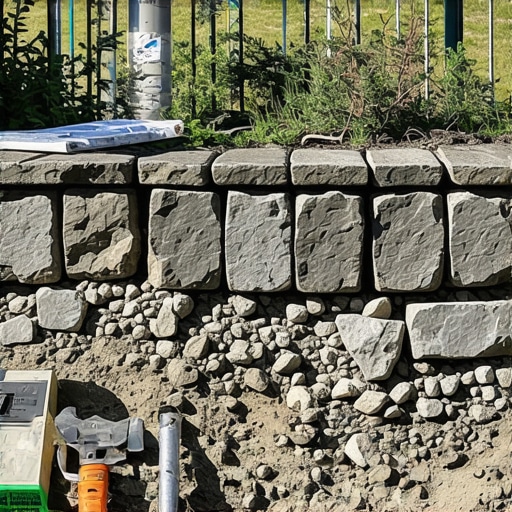
The homeowner called me out because they thought a squirrel or a heavy-footed teenager had nudged a limestone cap loose on their garden wall. To the untrained eye, it was just a loose stone. But when I slid my fiber-optic scope into the void behind the facade, the reality was grimmer. The internal structural steel, meant to tie the modular retaining walls to the core, was nothing but a trail of oxidized orange dust. Water had been sitting in the ‘cup’ of the wall for a decade, slowly turning a $40,000 investment into a heap of unsecured masonry. This wasn’t a ‘loose stone’ problem; it was a systemic failure of drainage and thermal logic. If your coping is popping off like a bottle cap, you aren’t looking at a minor repair—you are looking at a forensic crime scene where physics is the primary suspect.
The Physics of the Freeze-Thaw Siege
In the North, we don’t just build walls; we build fortifications against the molecular expansion of water. When water enters a hairline fissure in your mortar, it waits for the temperature to drop. At the moment of freezing, that water undergoes a phase transition, expanding by exactly 9% in volume. This isn’t a gentle nudge. It is an internal explosion. Over a single winter, the repetitive cycle of thawing and freezing acts like a hydraulic jack, slowly lifting the coping away from the wall’s bed joint. If you used a hard, high-Portland cement ‘mud’ on a soft stone, the stone will lose that fight every time, leading to spalling where the face of the stone simply shears off. This is why a retaining wall drainage upgrade is the only way to save a failing structure.
“Water penetration is the single greatest threat to masonry durability. Without proper flashing and drainage, even the finest craftsmanship will succumb to the elements.” – BIA Technical Note 7
The Chemistry of ‘Mud’ and the Suction of the Stone
Most modern contractors treat mortar like it’s just glue. It’s not. In the world of master masonry, we talk about the ‘tooth’ of the substrate. When you are buttering a coping stone, you are creating a chemical bond through the hydration process. If the concrete block foundation was bone-dry when the mortar was applied, the block sucked the moisture out of the mix before the crystals could grow into the pores. This results in a ‘cold joint’—a bond that looks solid but has the structural integrity of dried crackers. For a lasting failing retaining wall repair, we use fiber-reinforced mortars that provide tensile strength the old-school lime mixes couldn’t touch. These fibers act like microscopic rebar, holding the matrix together even when the ground heaves.
The Hydrostatic Pressure Trap
Why does the top fall off? Because the bottom is drowning. Without a retaining wall drainage upgrade, water collects behind the wall, creating hydrostatic pressure. This pressure doesn’t just push the wall forward; it forces moisture upward through capillary action. The moisture reaches the coping, gets trapped under the cap, and begins the slow process of de-bonding. If you don’t see weep holes at the base or a clear gravel chimney behind the blocks, your wall is a ticking time bomb. This same logic applies to chimney rebuild services; if the chimney crown (the ‘coping’ of the chimney) fails, the entire flue is at risk of chimney leak detection issues that can rot your floor joists from the inside out.
“All masonry walls should be designed to prevent the accumulation of water within the wall system.” – ASTM C270 Standard Specification
Modern Solutions: Self-Healing and Modular Systems
We are entering a new era of masonry forensics. We are now seeing the implementation of self-healing concrete foundations, which utilize calcite-producing bacteria to seal micro-cracks before they become structural failures. Furthermore, mortarless masonry systems are gaining traction because they allow for the natural movement and ‘breathing’ of the earth without the rigid brittleness of traditional mortar. Even the aesthetics are changing; metallic brick colors application is being used to create heat-reflective surfaces that reduce the thermal expansion of the wall, thereby protecting the coping from ‘thermal shock’ during high-summer afternoons.
The Step-by-Step Fix: Doing it Once
To fix a loose coping stone, you don’t just slap more mud on it. First, you must grind out the old, failing mortar until you hit sound material. Use a slicker to ensure the new joint is compacted—not just smeared. If you’re dealing with modular retaining walls, ensure the pins are engaged and the drainage aggregate hasn’t been clogged by fines. If the wall is leaning, you might need concrete block foundation repair techniques like helical piers. Finally, always use a breathable sealer. If you trap the moisture inside with a ‘lick-and-stick’ waterproof membrane, you are just inviting the next freeze-thaw cycle to finish the job. Remember, in masonry, you either work with the physics of water, or you get crushed by it.