The Red Snow: Recognizing the Early Signs of Spalling
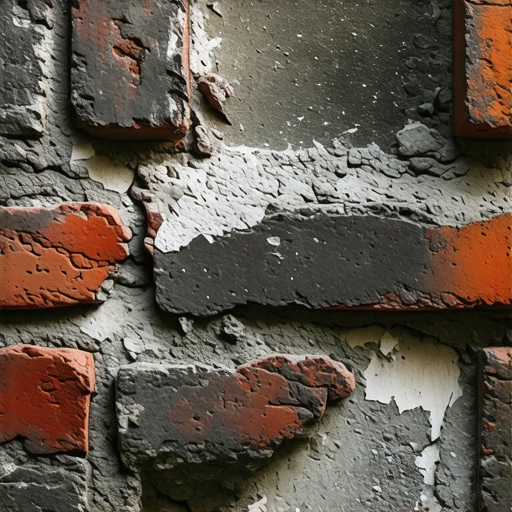
You wake up one morning, walk out to your porch, and notice a fine, terracotta-colored powder coating the concrete. To the untrained eye, it looks like a bit of construction debris. To a third-generation mason, it looks like the first stage of a funeral. We call it “red snow.” It is the byproduct of a brick’s internal structure literally disintegrating, a process known as spalling. When you see the face of a brick pop off in a clean slice, or worse, turn into a soft mush that you can scrape away with a fingernail, you aren’t just looking at an aesthetic problem. You are witnessing the physical failure of the building envelope. This isn’t a “handyman special” fix with a tube of caulk. This is a battle against the fundamental laws of thermodynamics and pore pressure. My uncle, a man who had more grit in his veins than a bag of Type S, used to take his trowel and strike the face of a suspect brick. If it didn’t give him that high-pitched, metallic ‘ring’—if it sounded like a dull thud—he’d mark it for extraction immediately. He knew that a brick without a ring was a brick that had lost its structural integrity, likely because it was suffocating under a layer of modern, non-breathable sealant or trapped behind a wall of hard Portland cement.
“Moisture is the primary agent of decay in masonry construction, contributing to over 90% of all masonry failures through various mechanisms including freeze-thaw cycles and salt crystallization.” – BIA Technical Note 7
The Physics of the Pore: Why Bricks Must Breathe
To understand why bricks turn to dust, you have to micro-zoom into the capillary structure of the clay itself. A brick is not a solid, inert block; it is a dense network of microscopic pores. It is a living, breathing thing. In a healthy wall, moisture enters through these pores and, more importantly, evaporates back out. This is known as vapor permeability. When a wall is functioning correctly, the mortar acts as the lungs. But when some “contractor” who watched two YouTube videos decides to use a high-strength, low-permeability Portland cement on a pre-1940s home, he is signing that wall’s death warrant. Modern cement is incredibly hard and dense. It creates a barrier that prevents moisture from escaping through the joints. Instead, the water is forced into the softer brick. In our trade, we call this the sacrificial principle: the mortar should always be softer and more permeable than the brick so that the mortar fails first, saving the masonry units. When you flip that logic, the brick becomes the sacrificial lamb. Cracked brick wall repair often begins with the realization that someone used the wrong “mud” fifty years ago.
The Freeze-Thaw War and Subflorescence
If you live in a climate where the temperature swings across the freezing mark, you are dealing with the most violent force in masonry. Water expands by approximately 9% when it turns to ice. When water is trapped inside the pore structure of a brick because it can’t evaporate through a hard mortar joint, it freezes. That 9% expansion creates internal hydraulic pressure that exceeds the tensile strength of the clay. The result? The face of the brick simply shears off. This is spalling. But there is a stealthier killer: subflorescence. You’ve likely seen efflorescence—that white, salty staining on walls. That’s just salt coming to the surface. Subflorescence is when those salts crystallize inside the brick’s pores. As those crystals grow, they exert enough pressure to turn the internal fired-clay structure into powder. This is why historic brick salvage is so critical; you can’t just slap a new, hard-fired brick into an old wall. You need a material match that respects the original chemistry of the facade.
The Forensic Inspection: From Trowels to Digital Twins
In the modern era, we don’t just rely on the ring of the trowel. Digital twin masonry projects allow us to create a 3D thermal and structural map of a building. We can see exactly where hydrostatic pressure is building up behind a facade. I’ve seen chimney structural repair jobs where the homeowner thought they just needed a new cap, but the digital scan showed the interior flue was so saturated that the entire stack was leaning four inches off-center. When we get called in for emergency masonry repair, it’s usually because someone ignored a hairline crack for a decade. Those cracks are pathways for water. Once that water hits the structural steel lintels or the wood framing behind the brick, you aren’t just looking at a masonry job; you’re looking at a structural stabilization project. This is where structural repointing becomes a surgical procedure. We have to rake out the old, failing joints without nicking the “arras” (the sharp edge) of the brick, then “butter” the new mortar in layers to ensure no voids are left behind.
“Mortar should be designed to be weaker than the masonry units so that any stress-induced cracking occurs in the mortar joints rather than the units themselves.” – ASTM C270 Standard Specification for Mortar for Unit Masonry
Mortar Repointing Services: The Art of the Mix
Not all “mud” is created equal. For a historic restoration, we often use lime putty or Type O mortar, which has a high lime content. This allows the wall to flex. Buildings move; they expand in the summer sun and contract in the winter. If your mortar is too stiff, the wall can’t move, and it cracks. We use a “hawk” and a “slicker” to strike the joints, ensuring the historic pointing styles—whether it’s a grapevine joint, a weathered joint, or a flush joint—match the original architecture. This isn’t just for looks. The shape of the joint determines how water sheds off the wall. A poorly struck joint can actually trap water against the brick, accelerating the very spalling we’re trying to prevent. During an outdoor kitchen masonry build or a green roofing masonry integration, we have to be even more careful about drainage. Green roofs are beautiful, but they introduce a massive, constant source of moisture. Without a proper flashing system and high-quality mortar repointing services, that moisture will migrate down into the masonry and start the