
The Architect’s Ghost and the Caliper’s Truth
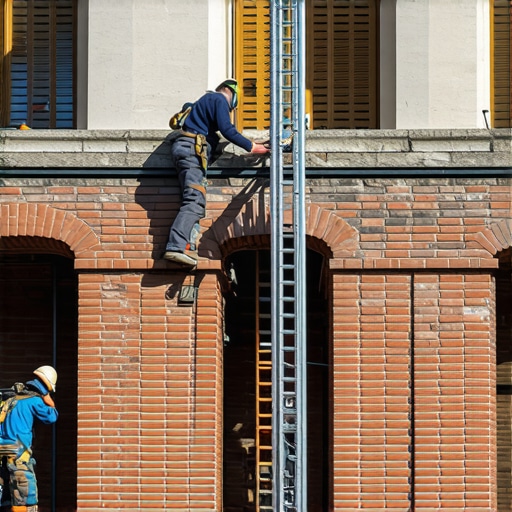
The architect thought we could just patch the decorative corbel with a standard mud mix and a bit of hope. But when I got the calipers out and really looked at the facade, I realized the original profile—a complex, hand-carved terracotta curve from 1912—was lost to a century of acid rain and freeze-thaw cycles. This wasn’t a job for a standard masonry repair services crew with a bag of Type N and a prayer. This was a forensic puzzle. The steel behind the brick was weeping rust, and the surrounding units were so brittle they’d shatter if you looked at them sideways. This is where the old world meets the new: when historic brick salvage fails to provide a match, we turn to the precision of 3D printing.
“Water penetration is the single greatest threat to masonry durability.” – BIA Technical Note 7
In my forty years of buttering bricks, I’ve seen the same tragedy play out on a thousand scaffolds. A historic building begins to fail, and a well-meaning contractor tries to fix a cracked brick wall repair using modern Portland cement on soft, pre-war clay. It’s a death sentence. The modern cement is too hard; it doesn’t breathe. When the temperature drops and the water trapped inside expands by 9%, it doesn’t just crack the mortar—it blows the face right off the brick. This is why we are seeing a shift toward 3D printed inserts. These aren’t plastic toys; we are talking about ceramic-based additive manufacturing that can replicate the specific porosity and ‘tooth’ of the original unit.
The Physics of Porosity and Thermal Expansion
To understand why a 3D printed insert works, you have to understand the micro-physics of capillary suction. Every brick has a specific rate at which it sucks moisture from the mortar—this is the ‘initial rate of absorption.’ If you drop a new, dense brick into a wall of old, thirsty ones, the wall won’t move together. They’ll fight. A 3D printed insert allows us to engineer the internal lattice of the unit to match the density of the surrounding historic brick salvage. This ensures that the thermal expansion coefficient remains uniform across the facade. When the sun beats down on a July afternoon, the printed insert expands at the same rate as the 19th-century clay next to it, preventing the dreaded vertical shear cracks.
When we get into stone wall repair or stone coping installation, the stakes are even higher. Coping stones are the umbrella of the wall. If they aren’t pitched perfectly, or if the joints fail, water migrates down into the core. Using 3D scanning, we can create a digital twin of a missing coping section, print a ceramic negative, and cast a replacement that fits with sub-millimeter precision. This isn’t just about aesthetics; it’s about structural integrity. A 3D printed insert can include internal channels for retaining wall weep hole cleaning systems, ensuring that hydrostatic pressure never builds up behind the face again. It’s about building a system that manages water rather than just trying to block it.
The Chemistry of Bonding: Advanced Adhesives vs. The Mud
I’ve carried enough mud on a hawk to know that tradition has its limits. While I’ll always prefer a lime-based mortar for repointing, sometimes the geometry of a brick column repair requires something more aggressive. This is where advanced masonry adhesives enter the fray. When we are inserting a 3D printed element into a historic stack, we often use silane-modified polymers that offer high flexibility. Unlike old-school epoxies that turn brittle and yellow, these modern adhesives act like a shock absorber between the old clay and the new insert.
“The mortar must be weaker than the masonry units it binds together to act as a sacrificial element.” – ASTM C270 Technical Manual
We see this principle most clearly in outdoor masonry fountain restoration. Fountains are the ultimate test of a mason’s skill because they are constantly saturated. Traditional patches usually fail within two seasons because the ‘cold joint’—the line where the old material meets the new—is a vector for leaks. A 3D printed insert can be designed with a ‘keyway’ or a ‘tongue-and-groove’ edge that increases the surface area for the adhesive, creating a mechanical bond that is far superior to a flat surface. When combined with a chimney heat shield installation approach for high-temp areas, you get a restoration that actually outlasts the original construction.
The Gritty Reality of the Job Site
Let’s talk about the slicker and the jointer. Even with 3D printing, the final ‘strike’ of the joint is what determines the lifespan of the repair. I’ve seen kids out of trade school try to butter a joint with no regard for the ‘suction’ of the brick. They leave honeycombing in the mortar, which is just an invitation for the next freeze-thaw cycle to move in and start wrecking the place. Whether you are installing a custom-printed soldier course or a standard brick column repair, you have to pack the mud tight. You have to feel the resistance. If the mortar doesn’t ‘ring’ when you tap the brick home, you’ve got a void.
Restoration isn’t about making it look new; it’s about making it last another century. 3D printing is just the latest tool in the chest, much like the first pneumatic grinders were to my grandfather. It allows us to solve the ‘impossible’ matches. It allows us to replicate the intricate textures of hand-tooled limestone in a way that a standard pre-cast mold never could. It’s about respect for the craft. When I look at a crumbling 1880s chimney, I don’t see a pile of trash; I see a structural history that deserves a precise, engineered solution. From retaining wall weep hole cleaning to complex stone coping installation, the future of our trade is digital, but the hands that finish the work must still be calloused and stained with lime.
When to Call the Forensic Expert
If you see a stair-step crack in your foundation, don’t just reach for a tube of caulk. That’s a ‘handyman special’ that will cost you ten times more in the long run. You need to understand why the soil is heaving or why the retaining wall weep hole cleaning was neglected. Masonry is a living, breathing system. When you integrate 3D printed components, you are performing surgery on a building. It requires an understanding of both the 1912 clay and the 2024 polymer. Do it once, and do it right. If you’re looking for a cracked brick wall repair that actually addresses the root cause, you have to look beyond the surface. The future of restoration isn’t just in the mud; it’s in the data, the chemistry, and the uncompromising standards of a master mason who knows that every brick tells a story—and some stories need a little high-tech help to finish.