
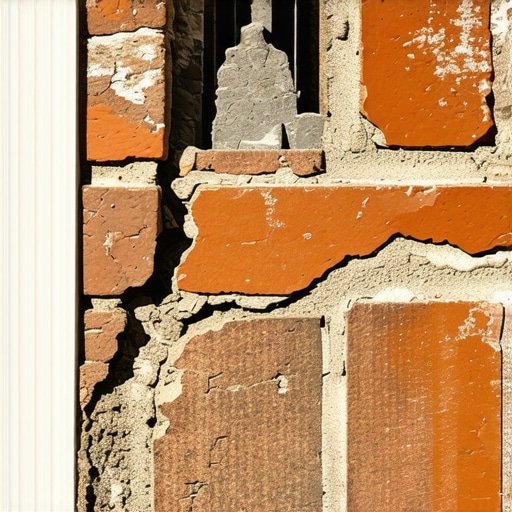
The Forensic Scene: More Than a Hairline Fracture
I remember a job last November, a grand old Tudor that had been in the same family for eighty years. The homeowner called me out because of what she described as a ‘bit of a zig-zag’ in the north corner. She thought it was just the house ‘stretching its legs.’ But when I pulled my high-resolution borescope out of my kit and fed it through a small vent in the crawlspace, my heart sank. The structural steel lintel wasn’t just rusting; it had exfoliated so much that it was three times its original thickness, literally prying the brickwork apart from the inside out. Behind that ‘hairline’ stair-step crack, the structural integrity of the corner was essentially held together by habit and hope. That is the grim reality of masonry forensics: what you see on the surface is rarely the full extent of the rot. When a wall starts to step, it’s not asking for a cosmetic touch-up; it’s screaming about a failure in the very earth or the very bones of the building.
The Anatomy of the Stair-Step: Physics of the Path of Least Resistance
To understand a stair-step crack, you have to understand the ‘tooth’ of the masonry. When a foundation settles—whether due to foundation underpinning issues or shifting soil—the stress has to go somewhere. It follows the path of least resistance. In a well-built wall, the mortar is the sacrificial lamb. It is designed to be slightly softer than the brick it holds together. This is why the crack zig-zags through the head joints and bed joints. It’s the wall trying to articulate like a hinge. If the crack went straight through the bricks themselves, you’d have a much more violent structural failure on your hands. We call this differential settlement. When one part of your home stays put while another sinks, the masonry is forced to shear. This isn’t just an aesthetic blemish; it’s a symptom of cracked brick wall repair needs that go deep into the geotechnical layer. If you ignore it, you’re not just looking at a drafty house; you’re looking at a potential collapse of the outer wythe.
“Water penetration is the single greatest threat to masonry durability. Once the bond between mortar and unit is breached, the rate of deterioration increases exponentially.” – BIA Technical Note 7
The Chemistry of Failure: Freeze-Thaw and the Hardness Trap
In regions where the mercury drops below zero, the physics of water becomes your greatest enemy. Water expands by approximately 9% when it freezes. When you have a stair-step crack, you have an open invitation for moisture to migrate into the core of the wall. If a previous ‘handyman’ performed commercial tuckpointing using high-strength Portland cement on a soft, historic brick, he created a ticking time bomb. The hard ‘mud’ traps moisture inside the softer brick. When that water freezes, it can’t escape through the mortar, so it blows the face off the brick—a process we call spalling. This is why structural repointing requires a deep understanding of ASTM C270 mortar types. You cannot just slap Type S on a 19th-century facade and expect it to breathe. You need a mix with the right ‘suction’ and ‘yield’ to allow the building to move without shattering. Without the right lime-to-sand ratio, you aren’t fixing the wall; you are suffocating it.
Micro-Zooming into the Joint: The Art of the Slicker and the Hawk
When we perform a structural masonry inspection, we aren’t just looking at the crack; we’re looking at the ‘joint profile.’ A proper repair involves grinding out the failed mortar to a depth of at least twice the width of the joint—none of this ‘skin coating’ garbage. We use a hawk to hold our fresh mud and a slicker or jointer tool to pack it in layers. This prevents ‘honeycombing,’ which is when air pockets are trapped behind the surface, leading to future failure. If you see a contractor ‘buttering’ only the edges of the brick, fire them on the spot. You need full bed depth to restore the structural bond. This is especially true for an outdoor fireplace rebuild or commercial smokestack repair, where thermal expansion forces are even more aggressive. The mortar must be packed tight to ensure the ‘tooth’ of the stone or brick is fully engaged.
Efflorescence and the Silent Warning
Sometimes the stair-step crack is accompanied by a white, powdery substance. This isn’t ‘mold’ as some homeowners fear; it’s brick efflorescence removal territory. These are mineral salts being carried to the surface by migrating moisture. It is the masonry’s way of sweating out a fever. If you see this along a crack line, it means your drainage is failing. Perhaps your chimney crown repair was neglected, and water is pouring down the internal cavity of the flue. Or perhaps someone installed stone veneer over brick without a proper drainage plane, creating a ‘moisture sandwich’ that is dissolving the original structure. High-pressure washing is the worst thing you can do here; it just forces more water into the thirsty brick. You have to stop the source, then treat the salts chemically to restore the pH balance of the wall.
“The architect should ensure that the foundations of buildings are laid on firm ground… for if the ground is loose, the whole structure will be in danger of ruin.” – Vitruvius, De Architectura
The Hard Truth: Restoration vs. Renovation
There is a massive difference between making a wall look pretty and making it stand for another century. A ‘renovation’ might involve slapping some stone veneer over brick to hide the cracks, but a true restoration involves foundation underpinning to stop the movement followed by precision cracked brick wall repair. If you don’t address the soil physics—the hydrostatic pressure pushing against your basement walls or the desiccation of clay during a drought—the cracks will return. Every commercial tuckpointing job we undertake starts with a moisture map. We find where the water is entering, where it’s being trapped, and how it’s affecting the carbonation of the lime. Old masonry is a living, breathing system. When it starts to crack in that tell-tale stair-step pattern, it’s not just a sign of age; it’s a forensic trail leading to a specific mechanical failure. Do not let a ‘tailgate contractor’ hide that trail with a bucket of cheap caulk. Do it once, do it right, and respect the craft that built this country brick by bloody brick.