
The Forensic Scene: What Lies Behind the Hairline
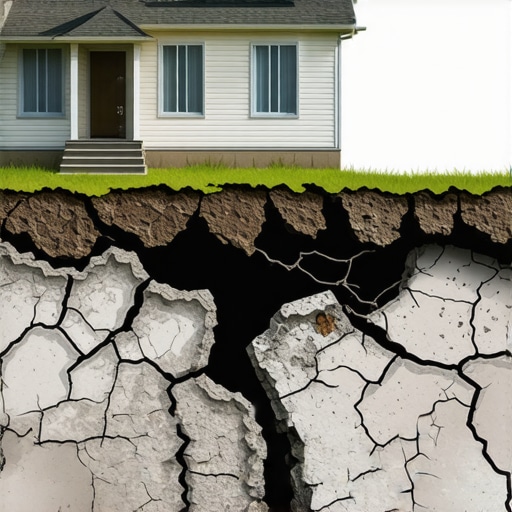
The homeowner stood in the damp shadows of his 1928 basement, pointing a flashlight at a vertical line no wider than a penny. "It’s just a hairline crack," he told me, his voice echoing off the fieldstone. "It’s been there for years." I didn’t say a word. I pulled my high-definition fiber-optic borescope from my kit and fed the lens into a small void where the mortar had turned to a sandy powder. On the screen, the truth was laid bare: the internal structural steel lintel was not just rusting—it was exfoliating, expanding to three times its original thickness and pushing the masonry apart from the inside out. What looked like a minor cosmetic blemish was actually a slow-motion explosion. This is the reality of forensic masonry. You don’t look at the crack; you look at the physics that forced the crack into existence. Whether you are dealing with a simple retaining wall or specialized chimney repair services, the logic remains the same: masonry is a rigid system in a fluid world. When the earth moves, or when water finds its way into the interstitial pore structure of a brick, something has to give.
[IMAGE_PLACEHOLDER_1]
The Physics of Settlement and Hydrostatic Pressure
In the trade, we talk about the ‘tooth’ of the stone and the ‘suction’ of a dry brick. When we mix our mud, we are creating a chemical bond that is supposed to last a century. But even the best Type N mortar cannot withstand the raw power of hydrostatic pressure. If you live in a region with heavy clay soils, that soil acts like a sponge. When it rains, it expands, pressing thousands of pounds of force against your foundation. If your drainage is clogged or non-existent, that water has nowhere to go but through your wall. Small cracks are the pressure relief valves of a failing structure. When water enters these fissures, it begins a process called leaching, where it slowly dissolves the calcium hydroxide in the mortar, leaving behind a brittle, hollow shell.
"Water penetration is the single greatest threat to masonry durability." – BIA Technical Note 7
This isn’t just a theory; it is the fundamental law of the job site. Once that water is inside, and the temperature drops below 32 degrees, you face the 9% expansion rule. Water expands as it freezes, and it will pop the face right off a hard-fired brick—a process we call spalling. If you see white, crusty powder on your walls, that’s efflorescence, the ‘salt cry’ of a wall that is drowning.
The Chemistry of Repair: Mortar, Mud, and Bone
One of the biggest mistakes I see ‘handymen’ make is using a high-strength Portland cement on an old, soft-brick house. It’s a death sentence for the facade. Ancient bricks were fired at lower temperatures; they are ‘breathable’ and soft. Modern bagged mortar is often too hard. In a proper cracked brick wall repair, the mortar must be the sacrificial element. It needs to be softer than the brick so that when the house breathes, the mortar takes the stress, not the clay. This is where tuckpointing comes in, though many people confuse it with simple repointing. True tuckpointing uses two contrasting colors of mortar to create an illusion of perfectly thin joints. If you’re restoring a landmark, you’re looking at brickwork pointing styles like ‘weather struck’ or ‘grapevine’ to shed water correctly. Using a concrete pump masonry mixes approach for large-scale stabilization requires a precise ratio of air-entrainment to ensure the new material can handle the freeze-thaw cycles without cracking the original assembly. We don’t just throw mud at a wall; we engineer a solution that matches the modulus of elasticity of the existing structure.
The Anatomy of Failure: From Chimneys to Fountains
I’ve been called out to outdoor masonry fountain restoration jobs where the stone was literally melting. Why? Because the original builder didn’t understand the ‘suction’ of the stone. They didn’t use a proper parge coat or a waterproofing membrane, and the stone sucked the water in until the minerals crystallized and blew the grain apart. It’s the same with chimneys. A chimney is the most exposed part of your home, hit by wind and rain from all four sides. Without regular facade cleaning to remove biological growth and sulfur deposits, the mortar joints turn into sponges. We often have to use masonry birdsmouth cuts to fit new lead flashing or to integrate structural supports that were never there to begin with. If the chimney is leaning, you’re past the point of simple mud work. You’re looking at foundation underpinning.
"The mortar shall be specified by either the proportion specifications or the property specifications." – ASTM C270 Standard Specification for Mortar
When the ground beneath a structure fails, we have to drive helical piers or pour new footings to find stable strata. This is the ‘Cure’ rather than the ‘Band-Aid’ of epoxy injections.
Advanced Techniques and Sustainable Practice
In modern masonry, we are seeing a shift toward sustainable block cutting and the use of recycled aggregates. But the old-world rules still apply. You can’t cheat gravity. If you’re building a new addition and the concrete pump masonry mixes aren’t vibrated correctly, you’ll end up with ‘honeycombing’—pockets of air that invite water to sit and rot the rebar. I always tell my apprentices to watch the ‘slicker.’ The way you strike a joint determines how long that wall lives. A concave joint, tightly packed with a jointer tool, compacts the mortar and creates a water-shedding profile. A flush joint or a recessed joint, if done poorly, just creates a shelf for ice to sit on. If you see a ‘soldier course’—bricks standing on end—above a window that is sagging, that’s a ‘cold joint’ failure. The lintel is gone, and the bricks are only held up by friction and a prayer. Don’t wait for the prayer to fail.
The Bottom Line: When to Panic
So, when should you actually worry? If you can fit a nickel into a crack, it’s time to call a professional. If the crack is ‘stair-stepping’ up the mortar joints, the house is pivoting on a point of settlement. If the crack is horizontal, you have a massive hydrostatic pressure problem, and the wall is literally bowing inward. These aren’t DIY fixes. Whether you’re looking for chimney repair services or a full structural foundation underpinning, you need someone who knows the smell of the lime and the sound of a ‘ringing’ brick. Don’t let a ‘handyman’ butter over a structural wound with cheap caulk. Do it once, do it right, and let the masonry stand for another century.