
The Silent Separation: Why Your Brick Veneer is Peeling Away
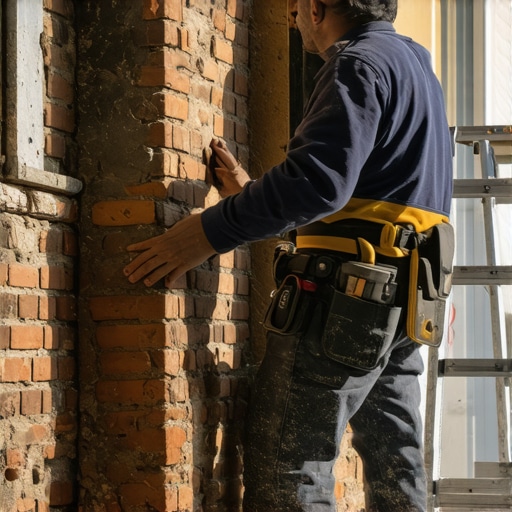
I’ve walked onto job sites where the brickwork looked pristine from the sidewalk, but a quick lean against the wall would make the whole facade shudder. It’s a chilling sensation for a mason who knows what’s happening behind the ‘mud.’ The homeowner thought it was just a hairline crack. But when I put my scope inside, I saw the structural steel was rusted to dust. This is the forensic reality of masonry tie failure. When the internal anchors that pin your brick veneer to the structural backup fail, the wall becomes an independent, unstable curtain. If you don’t address the internal anchors, you’re not just looking at a repair; you’re looking at a potential collapse. In the coastal Northeast, where the salt air chews through cheap zinc coatings, I’ve seen ‘lick-and-stick’ jobs and even traditional brick quoins detach like a wet label from a bottle. We aren’t just talking about aesthetic issues; we are talking about the physics of lateral loading and the inevitable pull of gravity.
“Corrosion of metal ties can lead to the loss of lateral support for the masonry wythe, potentially resulting in catastrophic failure of the wall system.” – BIA Technical Note 44B
The Physics of the ‘Rust-Jacking’ Phenomenon
To understand why ties fail, you have to look at the chemistry of the cavity. Most modern homes use thin, corrugated galvanized ties. Over forty years, the ‘tooth’ of the mortar holds moisture against that metal. If the mortar was mixed with too much sand or if it’s a high-sulfate environment, the zinc coating undergoes an electrochemical sacrifice. Once the zinc is gone, the iron in the steel oxidizes. Rust occupies up to six times the volume of the original metal. This expansion, known as ‘rust-jacking,’ actually pushes the bricks apart from the inside out. You’ll see it as horizontal cracking or a bulging facade. While we often talk about retaining wall batter correction for gravity walls, a brick veneer has its own ‘batter’ issues when ties fail; the wall begins to lean outward, losing its plumb line. This is where AI masonry assessment comes into play, using high-resolution thermography to detect the heat signatures of moisture trapped behind the brick, which is the primary catalyst for tie decay.
Remedial Anchoring: The Surgical Solution
The old-school way to fix this was a total teardown. You’d rip the wall down to the studs and start over. That’s a six-figure nightmare. Today, we use helical remedial ties. These are stainless steel fins that we drive through the brick and into the backup—whether that’s CMU, concrete, or timber. The ‘suction’ of the pilot hole is critical. We drill a tiny 6mm hole, then drive the helical tie home. The tie cuts its own thread into the substrate, creating a mechanical interlock that doesn’t rely on adhesives that might fail in a fire. This is far superior to foundation slab jacking or self-leveling masonry lifts when the issue is lateral, not vertical. We are effectively re-stitching the building’s skin to its skeleton. Once the tie is recessed, we patch the hole with a color-matched mortar. If you’re a real pro, you’re using a slicker to ensure that patch is dense and impermeable. This isn’t a ‘handyman special’ where you just squirt some caulk in the crack; this is structural forensic engineering.
Managing Moisture and Movement
Why do ties fail in the first place? Usually, it’s a failure of the drainage system. If your stone coping installation was botched or your retaining wall capstone replacement used the wrong sealant, water gets behind the veneer. In northern climates, that water undergoes the freeze-thaw cycle, expanding by 9% and putting immense pressure on the ties. We often see this on commercial smokestack repair projects where the thermal differentials are extreme. The masonry must breathe. If you apply certain metallic masonry finishes that act as a vapor barrier, you’re essentially trapping a ‘wet blanket’ against your ties. This accelerates the corrosion. When we do historic brickwork repointing, we use lime-based mortars specifically because they are ‘sacrificial.’ They allow moisture to wick out through the joint rather than staying trapped against the metal anchors. You have to respect the ‘old world’ logic: the mortar must be softer than the brick, and the ties must be more durable than the mortar.
“The selection of anchors and ties is critical to the performance of masonry veneers, especially in high-wind or seismic zones where lateral forces are significant.” – ASTM C1242
The Micro-Zoom: Helical Tie Mechanics
When we talk about the ‘grip’ of a helical tie, we’re looking at the shear strength of the substrate. In a ‘soft’ brick quoin repair, we have to be careful not to shatter the masonry unit. We use low-impact rotary hammers. The helical shape allows for a ‘spring’ effect, accommodating the natural thermal expansion and contraction of the wall without snapping. If you used a rigid bolt, the first time the sun hit that wall and it expanded, the bolt would either bend or blow the face off the brick. This is the same principle we apply in stone coping installation: you need a connection that is strong enough to hold, but flexible enough to live. Whether you’re dealing with a residential chimney or a massive commercial smokestack repair, the goal is the same: restore the structural integrity without destroying the historical fabric. We don’t want ‘cold joints’ or visible scars. We want a wall that stands for another century, silent and secure, held together by the invisible strength of stainless steel.