5 Sustainable Masonry Materials That Actually Last in 2026
The Ghost of Portland Past: A Restoration Tragedy
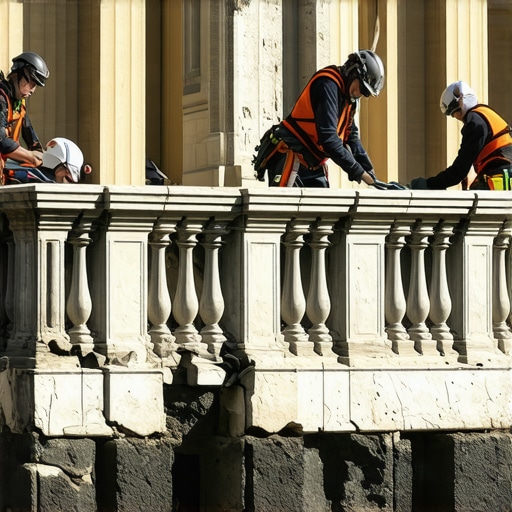
I recently stood before a 1920s courthouse where a ‘handyman’ had performed a stone facade restoration using off-the-shelf Type S mortar. It was a massacre. The stone was a soft Bedford limestone, and that hard, rigid cement had acted like a vice. When the winter hit, the stone couldn’t breathe. The trapped moisture froze, expanded, and blew the faces right off the blocks. That isn’t craftsmanship; it’s masonry malpractice. My old mentor, a man who had more limestone dust in his lungs than oxygen, used to say that a wall is a living thing. He’d rub a pinch of dry mortar between his thumb and forefinger to feel the ‘grit’ and ‘fat.’ If the suction wasn’t right, he’d send the batch back. He taught me that if you don’t respect the physics of the material, the building will eventually spit your work back at you in pieces.
“Water penetration is the single greatest threat to masonry durability, and the selection of mortar must prioritize vapor permeability over raw compressive strength.” – BIA Technical Note 7
1. Natural Hydraulic Lime (NHL): The Breathable Standard
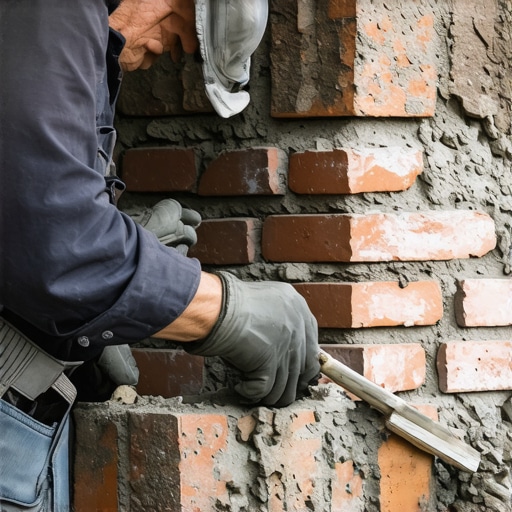
In 2026, we are finally seeing a return to historic pointing styles using Natural Hydraulic Lime. Unlike modern Portland cement, NHL sets through a process called carbonation—literally breathing in CO2 to harden. For commercial tuckpointing on structures built before the mid-20th century, NHL is non-negotiable. It offers a lower modulus of elasticity, meaning the wall can shift and flex without cracking the units. When we talk about freeze-thaw damage restoration, we’re usually fixing the mess caused by someone using mortar that was too hard. NHL allows moisture to migrate out of the wall rather than getting trapped behind a ‘plastic’ skin of modern cement. This is the ‘sacrificial principle’—the mortar should be the weakest link, protecting the brick from spalling.
2. Reclaimed Dimension Stone and Granite
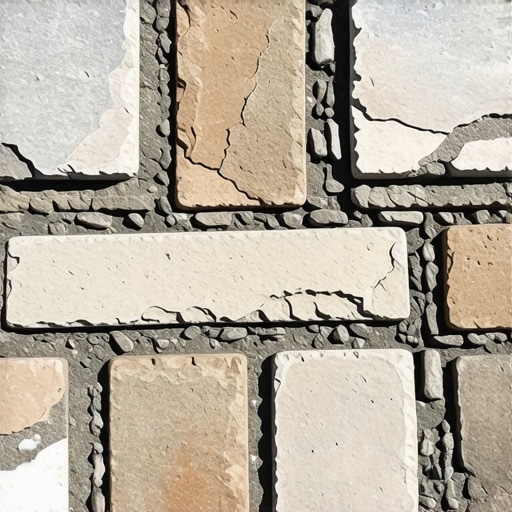
Sustainability in masonry isn’t always about a new lab-grown product; often, it’s about the ‘tooth’ of the stone we’ve already pulled from the earth. Reclaiming granite for brick quoin repair or foundation accents is the ultimate long-game move. Granite is nearly impervious to the chemical attacks of acid rain and urban pollutants. When we perform an outdoor masonry fountain restoration, we look for stone that has already survived a century. The carbon footprint of a stone that is reused is practically zero, and its durability is measured in centuries, not decades. We’re seeing a massive uptick in using reclaimed granite for concrete block foundation repair veneers, providing a shield that modern ‘lick-and-stick’ stone veneer simply cannot match.
3. Hemp-Lime (Hempcrete) Structural Blocks
While the old guard might scoff, the chemistry of hemp-lime blocks is undeniable. These units are carbon-negative, but more importantly for a forensic inspector, they handle moisture like a sponge that never rots. In commercial tuckpointing applications for modern eco-builds, these blocks provide a thermal mass that regulates interior temperatures. They don’t suffer from the ‘cold joint’ issues of poured concrete because the material is monolithic in its vapor management. When I use a drone chimney inspection to look at hemp-lime flues, I’m seeing far less creosote buildup because the material maintains a more consistent internal temperature, preventing the flash-cooling of exhaust gases.
4. Roman Concrete (Self-Healing Pozzolans)
The industry has finally cracked the code on why Roman piers are still standing while our 40-year-old bridges are crumbling. It’s the ‘hot mixing’ of quicklime and volcanic ash. This creates ‘lime clasts’ that act as a self-healing mechanism. When a hairline crack forms, water hits the unslaked lime, reacts, and recrystallizes as calcium carbonate, effectively ‘healing’ the crack. For foundation slab jacking and large-scale infrastructure, these self-healing pozzolans are the future. They eliminate the honeycombing often found in poorly vibrated modern pours. If we want stone facade restoration to last another 200 years, we need to stop thinking about concrete as a dead rock and start seeing it as a chemical reaction that never truly ends.
5. Recycled Glass Pozzolan Mortars
We’re moving away from high-carbon fly ash toward ground-glass pozzolans. When mixed into the ‘mud,’ this finely ground glass reacts with the lime byproduct of cement hydration to create additional Calcium Silicate Hydrate (C-S-H)—the glue that makes concrete strong. It makes the mortar more dense and less permeable to salt, which is critical for retaining wall weep hole cleaning and maintenance. If your weep holes are clogged, hydrostatic pressure will blow a wall out, but if your mortar is reinforced with glass pozzolans, it can withstand the ‘wicking’ effect of groundwater much better than standard Type N mixes.
“Mortar should be designed to be weaker than the masonry units it binds, ensuring that stresses are relieved through the joints rather than through the units themselves.” – ASTM C270 Standard Specification
The Forensic Reality of Maintenance
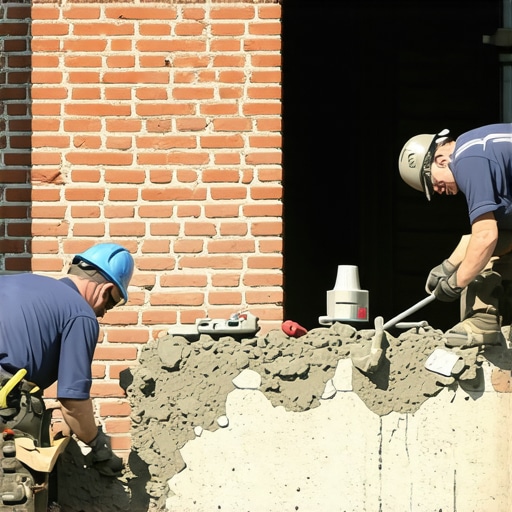
You can use the best materials in the world, but if you ignore the basics, you’re just ‘buttering’ a sinking ship. I’ve seen brick quoin repair jobs fail within two seasons because the mason didn’t account for thermal expansion. In the heat of the sun, a long run of brick can grow by half an inch. Without proper control joints, that energy has to go somewhere, and it’s usually into a ‘stair-step’ crack. Furthermore, retaining wall weep hole cleaning is the most ignored maintenance task in masonry. If the water can’t get out, the wall becomes a dam. Eventually, the weight of the saturated soil will overcome the shear strength of the mortar, and you’ll have a pile of expensive ‘sustainable’ rubble. Whether it’s foundation slab jacking to level a porch or using a slicker to finish a joint, the goal is always the same: keep the water moving where you want it, and make sure the materials can handle the water you can’t see.