4 Signs You Need Retaining Wall Capstone Replacement in 2026
The Hardscape Truth: Why Your Retaining Wall is Only as Good as Its Crown
I’ve spent forty years smelling wet lime and feeling the grit of masonry sand under my fingernails, and if there is one thing I have learned, it is that water is a patient assassin. Most homeowners look at a retaining wall and see a solid mass of stone or brick. I see a porous organism that is constantly trying to breathe, expand, and, unfortunately, dissolve. The capstone—the coping that sits atop the structure—is the only thing standing between your investment and a total structural collapse. By the time we hit 2026, many of the ‘fast-track’ walls built during the recent housing booms will be reaching their breaking point. If you aren’t paying attention to the ‘hat’ of your wall, you’re just waiting for a catastrophic failure.
My mentor, a man who could tell the moisture content of a brick just by the weight of it in his palm, used to drag his thumb across the underside of every coping stone we laid. He was looking for the drip edge. He’d say, ‘Kid, if this stone doesn’t have a clean undercut, the wall is going to drink its own sweat.’ He was right. Without that physical break to force water to drop away from the face of the masonry, the wall stays saturated. Once that happens, the clock starts ticking. Here is the forensic breakdown of why your capstones are likely failing and the four signs that you need to call in professional masonry repair services before the soil behind that wall decides it wants to live in your driveway.
“Water penetration is the single greatest threat to masonry durability. Proper coping and flashing are essential to divert water away from the internal structure of the wall.” – BIA Technical Note 7
1. The White Ghost: Excessive Efflorescence and Salt Crystallization
When I walk onto a job site for brick efflorescence removal, I’m not just looking at a cosmetic stain. I’m looking at a chemical trail of evidence. Efflorescence is the migration of soluble salts to the surface of the masonry. It happens when water enters the wall—usually through cracked or porous capstones—and dissolves the salts inherent in the mortar or the stone itself. As the water evaporates, it leaves behind that white, chalky powder. But here is the micro-zoom: it isn’t just on the surface. Inside the pores of the brick or stone, a process called sub-florescence is happening. The salts crystallize within the microscopic voids. As those crystals grow, they exert internal pressure that can reach thousands of pounds per square inch. This isn’t just a cleaning issue; it’s a sign that your capstone has stopped acting as a barrier. If your wall looks like it’s been dusted with flour every time it rains, the ‘mud’—our trade term for mortar—is being eaten from the inside out. You aren’t just looking at a cleaning job; you’re looking at a structural repointing necessity or a full capstone overhaul.
2. The ‘Pop-Off’ Syndrome: Spalling and Sectional Delamination
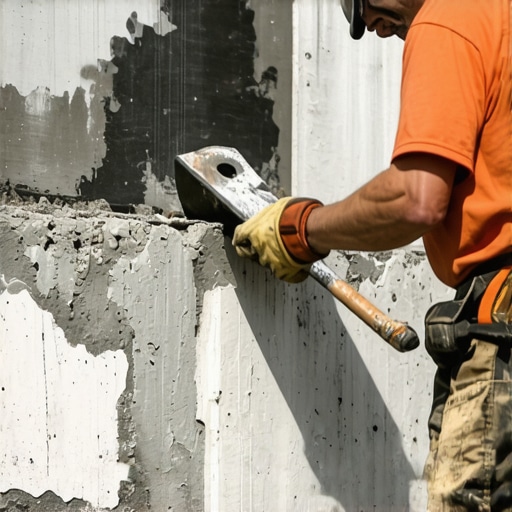
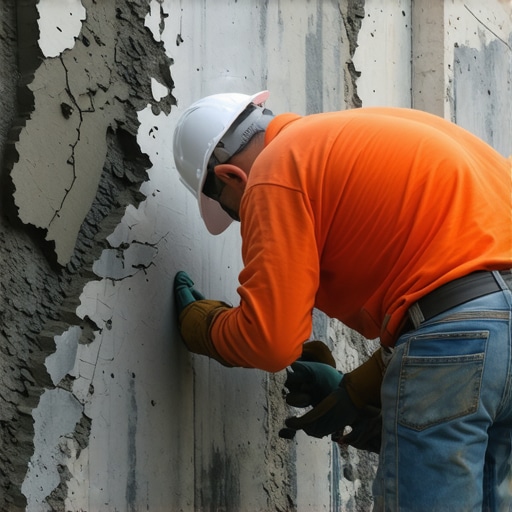
In the North, we live and die by the freeze-thaw cycle. Water is a unique beast; it expands roughly 9% in volume when it turns to ice. If your capstones are cracked, or if the tile grouts on masonry joints have failed, water seeps into the core of the wall. When that temperature drops below thirty-two degrees, that water expands. Because the modern Portland cement used in many ‘lick-and-stick’ veneers is too hard and brittle, it doesn’t give. Instead, the face of the stone or brick simply ‘spalls’ or pops off. I’ve seen $100,000 landscapes ruined because the contractor used a cheap, non-breathable sealer that trapped moisture behind the surface. This is the same physics we see in brick veneer detachment repair. Once the bond between the unit and the backup wall is broken by ice, the whole section becomes a liability. If you see chunks of your capstone on the ground, or if the surface feels soft and flaky like a rusted car fender, the hydration bond is gone. You need a slicker and a fresh batch of Type N mortar, or better yet, a complete replacement with air-entrained precast concrete that can handle the expansion.
“The use of coping materials with low water absorption is critical to preventing saturation-related failures in exterior masonry assemblies.” – ASTM C1364 Standard
3. Vertical Displacement and the ‘Soldier Course’ Lean
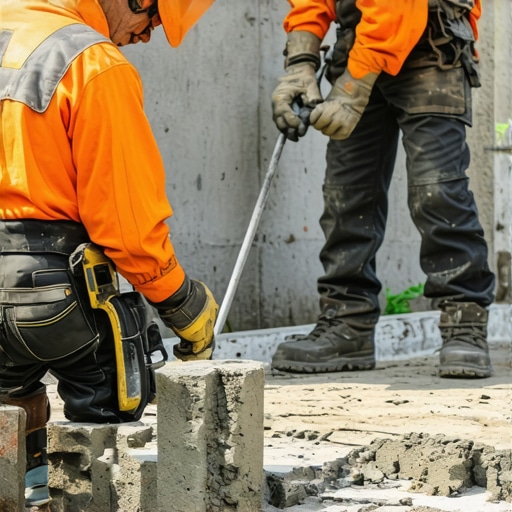
A retaining wall is a battle against hydrostatic pressure. The soil behind the wall is heavy, and when it gets wet, it’s even heavier. The capstone acts as a binder, often tied into the wall with a soldier course or specialized anchors. When I perform a forensic inspection, I look for ‘heaving.’ If your capstones are no longer level, or if they are starting to tilt forward, the wall is losing its fight. This often goes hand-in-hand with brick column repair issues nearby. The displacement tells me that water is pooling behind the wall because the drainage—the ‘weep holes’—is likely clogged with silt. This pressure pushes the top of the wall out first. Replacing the capstones isn’t just about the stone; it’s about resetting the geometry of the wall and potentially looking at foundation underpinning if the base has shifted. You can’t just butter the ends of the stones and hope for the best; you have to address the physics of the weight being held back.
4. The Hollow Ring: Mortar Decay and ‘Cold Joints’
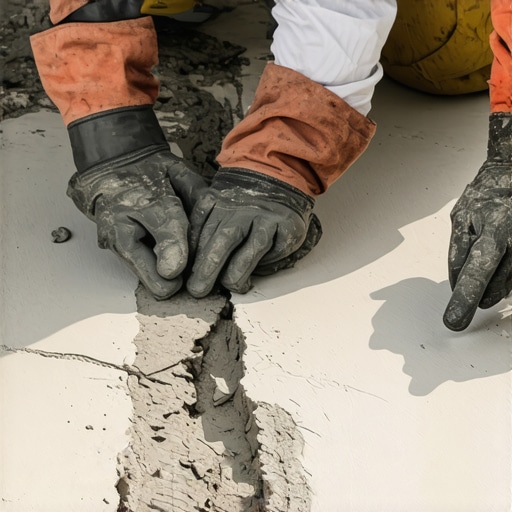
Take a hammer—not a sledge, just a small ball-peen—and lightly tap your capstones. A healthy masonry bond will ‘ring.’ It sounds solid, dense. If you get a dull ‘thud’ or a hollow rattling sound, you have a detachment. This is often the result of a ‘cold joint,’ where the mortar was allowed to flash-set before the stone was placed, or where the ‘suction’ of a dry stone pulled the water out of the mud too fast, preventing a proper chemical bond. We see this constantly in chimney repair services and chimney structural repair work where the crown is exposed to the most extreme elements. If the mortar between your capstones has turned to sand that you can scrape out with a screwdriver, the wall is open to the elements. This leads to chimney damper repair issues in houses, but in a retaining wall, it leads to the total loss of the structural core. If your joints are ‘honeycombing’—showing small holes and voids—you are months away from a total failure.
The Solution: Do It Once, Or Do It Twice
I’ve watched too many ‘handyman specials’ fail because they tried to fix a structural masonry issue with a tube of caulk from a big-box store. Masonry is about material compatibility. If you have an older wall, you can’t just slap high-strength Portland cement on it; you need a softer, lime-rich mix that allows for thermal expansion. Whether it’s a brick column repair or a massive sea-wall, the principle is the same: the capstone must be impervious, and the joints must be flexible. In 2026, as we deal with more volatile weather patterns and more extreme temperature swings, the ‘Old World’ methods of deep-bed mortar and proper flashing are the only things that will survive. Don’t wait for the wall to lean. Watch the caps. If they are failing, the rest of the wall is right behind them.