4 Red Flags Your Chimney Crown Needs Repair in 2026
The Concrete Sentry: Why Your Chimney Crown is Dying
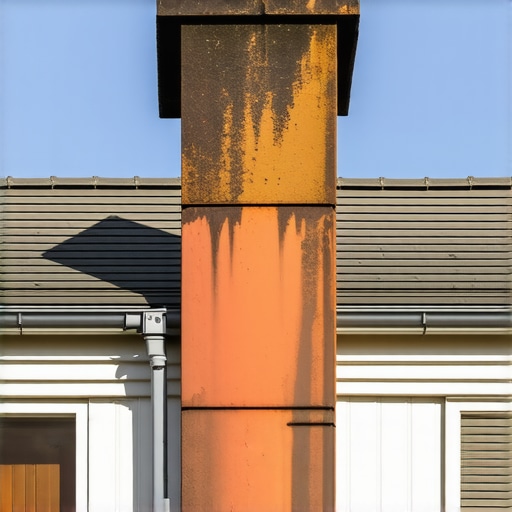
I’ve spent forty years climbing ladders and staring at the jagged reality of American masonry. To the untrained eye, a chimney is just a stack of bricks. To me, it’s a living, breathing thermal engine. But there’s one part that consistently fails because homeowners treat it like an afterthought: the chimney crown. This is the ‘lid’ of your chimney, the slab of masonry that sits atop the last course of brick. It’s meant to shed water like an umbrella, but more often than not, I find them acting like a sponge.
By 2026, many of the homes built during the construction booms of the early 2000s will be hitting a critical failure point. The materials used back then—often cheap, high-sand-content concrete poured without a second thought—are reaching the end of their chemical lifecycle. I recall a specific structural masonry inspection last autumn. The homeowner thought it was just a hairline crack. But when I put my scope inside, I saw the structural steel was rusted to dust. The crown had been leaking for a decade, and the moisture had migrated down the internal cavity, rotting the wall ties from the inside out. It wasn’t just a repair anymore; it was an emergency masonry repair situation that cost three times what a simple crown wash would have cost five years prior.
“Water penetration is the single greatest threat to masonry durability.” – BIA Technical Note 7
The Physics of the Freeze-Thaw War
If you live in a climate where the temperature swings across the freezing mark, your chimney crown is under constant siege. Water is a relentless invader. It finds a microscopic fissure, settles in, and then the physics of expansion takes over. When water freezes, it expands by approximately 9% in volume. This isn’t just a gentle push; it’s an internal explosion. In a poorly constructed crown—one made of thin ‘mud’ or mortar rather than a true reinforced concrete—the internal pressure of that ice will snap the bond between the cement and the aggregate. This leads to spalling, where the surface of the crown begins to flake off like old skin.
Red Flag 1: The Stair-Step Fissure and Vertical Fractures
When I conduct a structural masonry inspection, I first look for vertical cracks that bisect the crown. Unlike horizontal cracks which might indicate simple drying shrinkage, vertical cracks that go through the entire depth of the slab mean the crown has lost its structural integrity. This is often caused by thermal expansion. During the day, the chimney flues heat up as you run your fireplace. The brickwork expands. The crown, exposed to the cold wind, stays rigid. Without a proper bond break or expansion joint between the flue liner and the crown, the flue will literally ‘punch’ through the crown as it grows. If you see cracks radiating from the flue toward the edge of the chimney, you are looking at a ticking time bomb.
Red Flag 2: Efflorescence and the White Salt Ghost
Have you noticed white, powdery staining on the bricks just below the crown? That isn’t just dirt. It’s efflorescence. This is a chemical signpost that water is moving through the masonry. As water saturates the crown, it dissolves the calcium hydroxide and other salts within the cement. As the sun comes out and the water evaporates, it pulls those salts to the surface. If you see this, it means your masonry waterproofing solutions have failed. The crown is no longer shedding water; it’s filtering it. By the time the salt reaches the exterior brick, the interior of your chimney is likely damp, leading to mold and the eventual ‘burning’ of the mortar joints where the pH balance is destroyed, causing the mud to turn to sand.
“The chimney crown shall be sloped to shed water and shall be provided with a drip edge to prevent water from running down the face of the masonry.” – ASTM C1283
Red Flag 3: Delamination and the ‘Hollow’ Sound
A master mason doesn’t just look; he listens. When I’m up on the roof, I’ll take a small hammer or even a heavy slicker and lightly tap the surface of the crown. A healthy crown sounds like a solid rock. If I hear a ‘hollow’ thud, it means the crown has delaminated from the bricks beneath it. This often happens in older homes where someone tried a ‘handyman special’ by buttering a thin layer of mortar over an old, cracked crown. This is the ‘lick-and-stick’ method of chimney crown repair, and it’s a scam. That thin layer of mud can’t handle the structural loads. It loses its ‘tooth’ and separates, creating a hidden reservoir for water to sit and rot your flue. If you see layers of the crown peeling back like an onion, you need a full tear-off and a new pour.
Red Flag 4: Rusted Flashing and Damp Fireboxes
Sometimes the red flag isn’t on the roof; it’s in your living room. If you smell a musty, ‘old basement’ odor coming from your fireplace in the summer, or if you see rust on your damper, the crown is likely the culprit. When a crown fails, water runs down the inside of the chimney. It bypasses the flush pointing services on the exterior and attacks the interior liners. I’ve seen chimneys where the foundation was actually being undermined because water was pooling at the base of the chimney clean-out, all because the crown up top was cracked. You might think you need tuck pointing services for the exterior, but if you don’t fix the lid (the crown), you’re just putting a band-aid on a gunshot wound.
The Solution: Beyond the DIY Patch
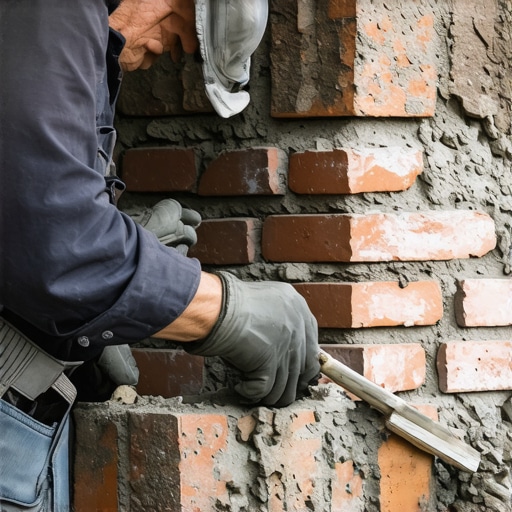
Many homeowners head to the big-box store and buy tuckpointing tools for DIY, thinking they can just smear some caulk in the cracks. Don’t do it. True chimney crown repair requires a professional-grade elastomeric coating or a complete replacement with a cantilevered concrete slab. A cantilevered crown extends two inches past the brickwork and has a ‘drip notch’ on the underside. This ensures that every drop of rain falls clear of the chimney structure entirely. This is the difference between a chimney that lasts 20 years and one that lasts 100.
We are also seeing a rise in green roofing masonry integration, where chimney structures must be adapted to handle the higher humidity levels of rooftop gardens. In these cases, mortarless masonry systems are sometimes used for the decorative veneer, but the core structural chimney—especially the crown—must remain a monolithic, waterproof barrier. If you are planning a renovation in 2026, ensure your inspector looks specifically at the ‘wash’ of the crown and the state of the foundation below.
The Forensic Verdict
In my forty years, I’ve never seen a chimney survive a decade of neglect without the crown showing some level of fatigue. Don’t wait for the bricks to start falling into your yard. If you spot any of these flags, call for a structural masonry inspection. It’s the difference between a $500 maintenance visit and a $15,000 reconstruction. Masonry is about the long game. It’s about building something that your grandkids will still see standing. But even the strongest brick needs a good hat to keep the rain out. Make sure your chimney’s hat is in good repair before the 2026 storm season hits.
![3 Sustainable Block Cutting Tactics to Cut Project Waste [2026]](https://masonryrescue.com/wp-content/uploads/2026/02/3-Sustainable-Block-Cutting-Tactics-to-Cut-Project-Waste-2026.jpeg)