4 Metallic Brick Color Tips for Modern 2026 Facades
The Forensic Inspection: Why Your Modern Facade is Bleeding
The developer thought it was just a surface stain. He called me out to a three-year-old luxury complex in Austin where the ‘iridescent charcoal’ metallic bricks were showing strange, jagged white lines. I didn’t even need my level. I put my fiber-optic scope inside a weep hole and saw the nightmare: the structural steel was already weeping rust, and the ‘high-tech’ metallic finish was delaminating because the contractor didn’t understand vapor drive. The homeowner thought it was just a hairline crack. But when I put my scope inside, I saw the structural steel was rusted to dust. This is what happens when you prioritize the ‘look’ of 2026 without understanding the physics of 1920. When you work with metallic-glazed units, you aren’t just laying mud; you are managing a heat-sink. These bricks absorb thermal energy at a rate that standard clay never dreamed of. If you don’t account for the coefficient of linear thermal expansion, that wall will tear itself apart before the mortgage is even paid down. Modern architecture demands these shimmering, futuristic aesthetics, but the physics of masonry remains rooted in the stone. To keep these facades from becoming a liability, we have to talk about the chemistry of the bond and the reality of moisture movement.
1. Respect the Thermal Load of Dark Metallics
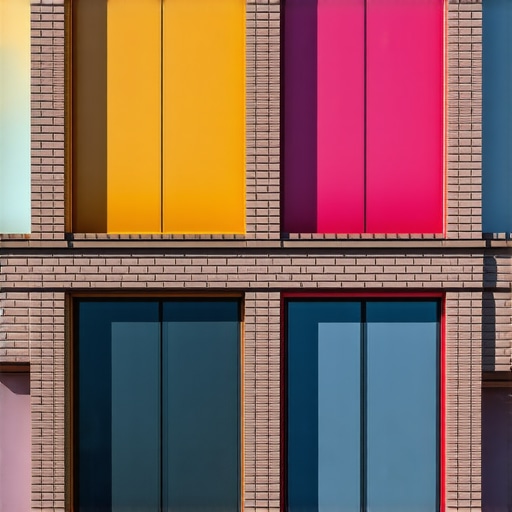
When we talk about metallic brick color tips, we have to start with the albedo effect. A standard red brick reflects a decent amount of solar radiation. A metallic-glazed ‘Gunmetal’ or ‘Titanium’ brick, however, acts like a battery. In a high-heat environment like Texas or Nevada, the surface temperature of these units can exceed 150 degrees Fahrenheit. This leads to ‘Flash Setting’ of your mortar. If you butter a brick that is baking in the sun, the suction—the rate at which the brick pulls water from the mud—becomes violent. The water is sucked out before the cementitious crystals can properly hydrate, leaving you with a brittle, sandy joint that will fail the first time the wind hits 40 mph.
“Water penetration is the single greatest threat to masonry durability.” – BIA Technical Note 7
In these modern 2026 facades, you must use control joints every 15 to 20 feet. Without these relief points, the thermal expansion of a long run of dark metallic brick will create enough pressure to bow the wall or cause horizontal shearing. We often see this in concrete masonry unit restoration where the backup wall moves at a different rate than the veneer. To prevent this, you need to pre-wet the units and ensure you are using air-entrained mortar to allow for microscopic movement within the joint structure itself.
2. The Chemistry of the Glaze and Vapor Drive
Metallic bricks are typically created through a process of manganese injection or vacuum-deposition glazing. This creates a surface that is virtually non-porous. While that sounds great for weatherproofing, it’s a trap for the inexperienced. In a standard wall, moisture moves through the brick and breathes out. With a metallic glaze, the face of the brick is a vapor barrier. If moisture gets behind that glaze—either from internal humidity or rising damp from poor foundation waterproofing—it has nowhere to go. During a freeze-thaw cycle, that trapped water expands by 9%, and it will pop that expensive metallic face right off the brick. This is known as spalling, and in a metallic facade, it looks like a cheap car with a peeling clear coat. To avoid this, your masonry waterproofing solutions must include a clear, unobstructed cavity and high-performance drainage mats. We often use sustainable block cutting techniques to ensure that every ‘soldier course’ and ‘header’ has a perfectly square edge to prevent water from ‘pooling’ on the tiny ledges of the brick. If the water can’t get out through the weep holes, it will find a way out through your drywall.
3. Mortar Selection: Don’t Use ‘Lick-and-Stick’ Mentality
I see too many guys using Type S mortar for everything because it’s ‘strong.’ Strength is the enemy of longevity in many metallic applications. You need a mortar that is ‘sacrificial.’ The mortar should be slightly softer than the brick so that when the building moves—and it will move—the cracks happen in the easily repairable mud, not the $5-a-piece metallic brick. For modern facades, tuckpointing weatherproofing is about more than just aesthetics; it’s about the modulus of elasticity.
“The use of mortar with a higher compressive strength than the masonry units can lead to excessive stress concentrations and cracking of the units themselves.” – ASTM C270 Standards
This is why we advocate for full repointing services using specific Type N or modified lime blends that can ‘self-heal’ small fissures through carbonation. When you are applying the mud, you need to use a hawk and slicker to tightly pack the joints. Any ‘honeycombing’—those little air pockets in the mortar—will act as a reservoir for water. In 2026, we are also seeing a shift toward sustainable masonry materials, including recycled glass aggregates in the mortar, which can actually complement the metallic sheen of the brick while providing better thermal resistance.
4. Forensic Maintenance and the 2026 Toolkit
You can’t just build a metallic facade and walk away. Because these materials are so sensitive to thermal movement and moisture trapping, you need a proactive maintenance plan. This is where drone chimney inspections and thermal imaging come into play. We use drones to look for ‘hot spots’ on the facade where the insulation might be wet, indicating a breach in the masonry waterproofing solutions. If you have a chimney integrated into a metallic facade, chimney interior parging is non-negotiable. The heat from the flue, combined with the sun-baked metallic exterior, creates a massive thermal gradient that can crack the masonry core. If you see a hairline fracture in a metallic soldier course, don’t wait. Emergency masonry repair for these high-end finishes often involves stabilizing the substrate before the delamination spreads. We use sustainable block cutting to replace damaged units without vibrating the rest of the wall to pieces. It’s about surgical precision, not a sledgehammer. Do it once, do it right, or you’ll be paying me to come back with a forensic team to tell you why your $200,000 facade is sitting in the flower beds.