4 Flush Pointing Secrets for a Smoother 2026 Masonry Finish
The Thirst of the Clay: A Lesson in Masonry Survival
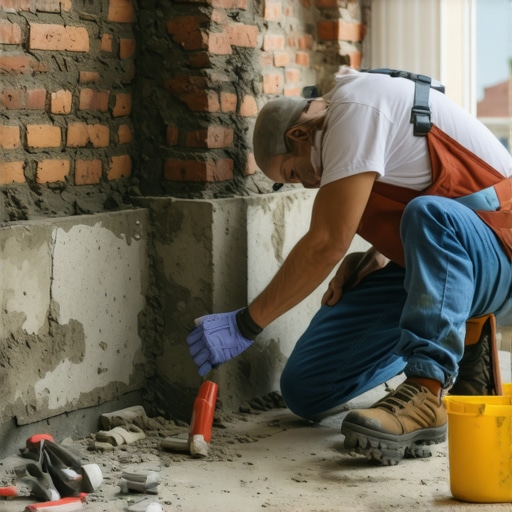
I remember a job back in the late 90s, working under a man they called ‘Iron-Clad’ Pete. He didn’t care about your speed; he cared about your ears. He’d walk up to a stack of brick, pick two up, and clack them together. If they didn’t give off a high-pitched, metallic ‘ting,’ he’d send the whole pallet back. He taught me that the ‘thirst’ of a brick—its initial rate of absorption—dictates whether your tuckpointing will last a century or crumble before the check clears. In 2026, as we face more volatile weather patterns, understanding this ‘thirst’ is no longer just old-timer wisdom; it is a forensic necessity for anyone doing serious chimney repair services or foundation wall bowing repair. When you slap mud onto a dry, sun-baked brick, that unit acts like a sponge, instantly sucking the moisture out of your mix. This ‘burns’ the mortar, arresting the hydration process and leaving you with a brittle, sandy mess that lacks any structural ‘tooth.’ To get a smooth flush finish that actually bonds, you have to manage that suction by pre-wetting the masonry, ensuring the mortar can cure slowly, forming those critical C-S-H crystals that provide long-term durability.
“Water penetration is the single greatest threat to masonry durability.” – BIA Technical Note 7
[image_placeholder]
Secret 1: The Chemistry of Sustainable Tuckpointing Mortars
Modern masonry is obsessed with speed, which usually means high-portland mixes that are far too hard for historic structures. If you’re working on a pre-1940s building, using a modern Type S mortar is a death sentence for the brick. The mortar must be the sacrificial lamb of the wall. It needs to be softer and more permeable than the units themselves. This is where sustainable tuckpointing mortars, specifically Natural Hydraulic Lime (NHL), come into play. Unlike Portland cement, which creates a rigid, non-breathable barrier, lime mortars allow for ‘autogenous healing.’ If a hairline crack forms due to thermal expansion, moisture reacts with the unhydrated lime in the joint, transporting it into the crack to reseal it. This breathability is essential for preventing brick efflorescence removal cycles, as it allows salts to migrate out of the wall without blowing the faces off the brick. When aiming for a flush finish in 2026, the mix must be lean and well-graded, using sharp sand that provides the ‘grit’ needed to resist shrinkage. We talk about ‘mud’ as if it’s just wet dirt, but it’s a sophisticated chemical reactor that requires precise ratios to handle the freeze-thaw cycles of the north.
Secret 2: Precision in Sustainable Block Cutting
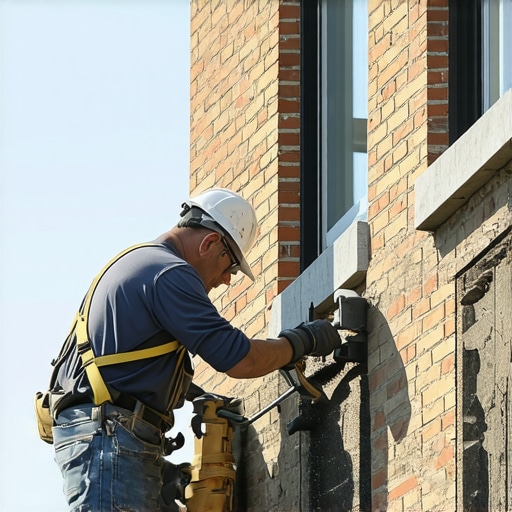
A flush finish is only as good as the prep work. Most ‘handymen’ will take a grinder and hack away at a joint, creating clouds of dust and micro-fractures in the surrounding stone. Sustainable block cutting techniques involve using diamond-tipped, vacuum-shrouded blades that don’t just clear the joint, but leave a roughened surface—the ‘tooth’—for the new mud to bite into. If you’re dealing with failing retaining wall repair, you can’t just butter the edges. You have to rake out the joints to a depth of at least twice the width of the joint. Anything less is just a ‘lick-and-stick’ repair that will pop off after the first hard freeze. The goal is to avoid ‘honeycombing’—those air pockets hidden deep in the bed joint that collect water. When that water freezes, it expands by 9%, and that’s when you start seeing the ‘soldier course’ above windows begin to sag or rotate. Proper cutting ensures that the mortar is fully packed from the back of the joint forward, creating a monolithic barrier against hydrostatic pressure.
Secret 3: The Physics of the Flush Strike
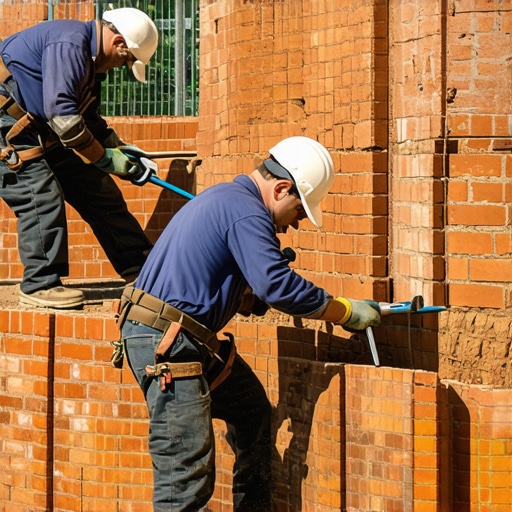
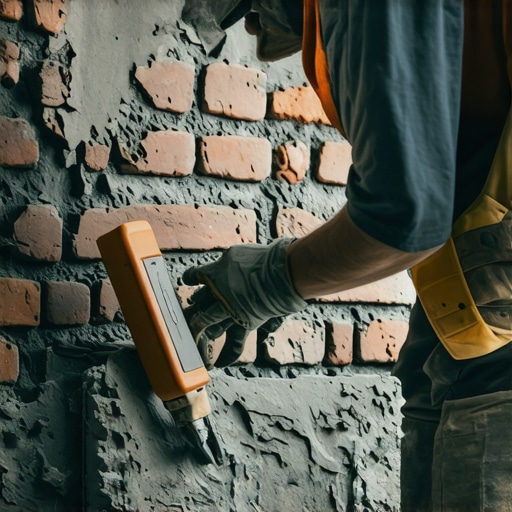
The difference between a amateur job and a master’s finish is in the timing of the ‘strike.’ You don’t just smooth the mortar immediately after applying it with your hawk and trowel. You wait until it is ‘thumb-print hard.’ If you strike it too wet, you pull the fines to the surface, creating a ‘fatty’ joint that will shrink and crack. If you wait too long, you can’t compress the mud. For a true flush finish that redirects water, you use a slicker tool to pack the mortar tight against the brick edges. This compression is vital. It’s not just about aesthetics; it’s about density. A well-compressed joint is far more resistant to water ingress than a loose, smeared one. This is especially critical in chimney leak detection; often, the leak isn’t a hole, but a series of micro-pores in uncompressed mortar joints that act like straws, drawing water into the flue via capillary action. If the chimney flue liner installation wasn’t done with a proper crown and flush-pointed shoulders, you’re essentially inviting a slow-motion collapse.
“Mortar should be weaker than the masonry units so that any cracks occur in the mortar joints where they can be easily repaired.” – ASTM C270
Secret 4: Integrated Masonry Waterproofing Solutions
In 2026, we have to look at the wall as a whole system, not just a collection of bricks. Flush pointing is the first line of defense, but on high-exposure elevations, it must be paired with masonry waterproofing solutions that don’t film over the surface. Avoid the ‘wet look’ sealers you see at big-box stores. Those are ‘breathability killers.’ They trap moisture behind the surface, leading to sub-florescence—where salts crystallize inside the brick, causing the face to spall off in sheets. Instead, we look for silane-siloxane penetrating sealers that chemically bond with the silica in the brick and mortar. This is particularly relevant for foundation wall bowing repair. If the exterior of a foundation isn’t shedding water because of poor pointing and failed waterproofing, the soil becomes saturated, increasing the hydrostatic load until the wall begins to deflect inward. A master mason knows that a flush joint isn’t just a flat line; it’s a structural seal that protects the core of the building from the relentless cycle of wet and dry. Whether you are performing a simple tuckpointing job or a complex historic restoration, these secrets—managing suction, choosing the right mud, precision cutting, and timed compression—are what separate the artisans from the amateurs.
The Final Strike: Do It Once, Do It Right
Cynicism in this trade comes from seeing too many ‘quick fixes’ fail. I’ve seen $100,000 homes compromised because a contractor didn’t understand the thermal expansion of a long run of masonry. They forgot the control joints, or they used a ‘cold joint’ where new mud met old without proper bonding agents. If you’re looking at your home and seeing white crusty powder—that’s efflorescence—don’t just wash it off. It’s a symptom of a deeper moisture problem. Invest in a forensic inspection, get the right sustainable mortars, and ensure your flush pointing is handled with the grit and precision the craft demands. Masonry is the only trade that builds for the next century; don’t let 2026 be the year your walls start to forget their purpose.