3 Signs You Need Historic Mortar Analysis for 2026 Projects
The Ghost in the Wall: Why Your Historic Facade is Screaming for Help
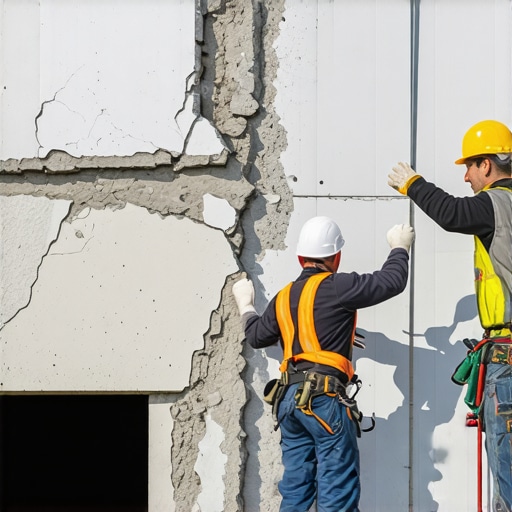
The homeowner called me out because she thought it was just a hairline crack, a minor aesthetic nuisance on the west wing of her 1922 Georgian Revival. But when I slid my fiber-optic scope into the void behind the soldier course, the reality was a gut-punch to her renovation budget. The structural steel lintels weren’t just rusting; they were exfoliating like a dry pastry, expanding with enough force to lift the entire masonry wythe. This wasn’t a surface issue. It was a chemical war. The previous ‘repair’—a classic handyman special—had used a high-strength Portland cement over a soft, breathable lime-based substrate. By choking the wall’s ability to breathe, they had effectively turned the brickwork into a pressure cooker of moisture and salt. This is the forensic reality of modern masonry: if you don’t respect the chemistry of the past, the future of your building is already written in the rubble.
“Water penetration is the single greatest threat to masonry durability, specifically when trapped by impermeable modern materials.” – BIA Technical Note 7
Sign 1: The Fatal ‘Pop’—Brick Spalling Prevention and the Freeze-Thaw Trap
In the trade, we look for the ‘face-off.’ When I walk a site and see orange dust and shards of brick on the ground, I know exactly what I’m looking at: brick spalling prevention failure. This happens because of a fundamental misunderstanding of hygrothermal movement. Historic bricks, fired in kilns that lacked the digital precision of today’s factories, are porous. They are like sponges. They take in water and they let it go. When a contractor slaps a modern, non-breathable high-performance mortar mix designed for skyscraper foundations onto these soft bricks, the water gets trapped. In the winter, that water freezes. Since water expands roughly 9% in volume when it turns to ice, and the modern mortar is harder than the brick, the pressure has nowhere to go but out through the face of the brick. The brick literally explodes from the inside. We call this a sacrificial failure, except the wrong part is being sacrificed. A proper historic mortar analysis for your 2026 planning will identify the compressive strength and vapor permeability of your existing units to ensure the new ‘mud’ you’re buttering onto those joints is actually softer than the brick itself. This is the ‘Sacrificial Principle’: the mortar should be the part that fails over fifty years, not the masonry unit.
Sign 2: The White Ghost—Efflorescence and the Failure of Sustainable Tuckpointing Mortars
If your walls are weeping white, powdery salt, you don’t have a cleaning problem; you have a forensic chemistry problem. This efflorescence is often the result of using the wrong binder in your sustainable tuckpointing mortars. When we analyze 100-year-old ‘mud,’ we aren’t just looking at sand; we’re looking at the carbonation of lime. Modern Portland cement undergoes a rapid hydration process, but historic lime mortar cures through carbonation—a slow dance with atmospheric CO2 that can take years. When you introduce modern sulfates and salts from cheap concrete pump masonry mixes into an old wall, you trigger a migratory salt reaction. This is where historic pointing styles become critical. It’s not just about the look—whether it’s a grapevine joint or a weather-struck profile—it’s about how that joint sheds water. A forensic analysis will involve a sieve test, where we wash away the binder to see the ‘tooth’ of the sand. Matching the sharp, angular grains of the original aggregate ensures the new mortar has the same capillary draw as the old, preventing the ‘honeycombing’ effect that eats buildings from the inside out.
Sign 3: Chimney Decay and the Invisible Threat
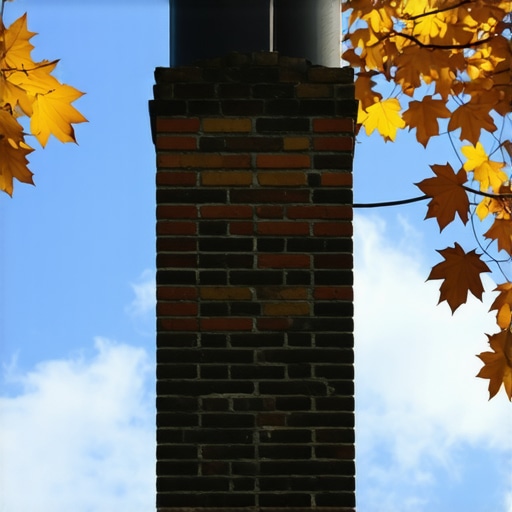
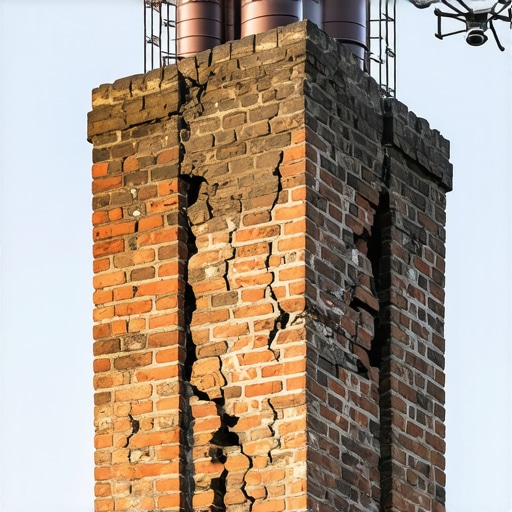
The most dangerous place on a historic property is the one you can’t see without a ladder or a drone chimney inspection. I’ve seen chimneys that looked perfect from the driveway but were essentially hollow tubes of loose aggregate held together by gravity and habit. If you see cracks in the masonry birdsmouth cuts near the roofline, you’re looking at thermal shock. The internal heat of the flue, combined with the lack of a proper chimney flue liner installation, creates a massive thermal bridge. The masonry expands at a different rate than the chimney flashing repair materials, leading to cold joints where water enters. Once water gets behind the flashing, it travels down the interior of the wall, often manifesting as basement dampness that foundation waterproofing experts will try to fix with expensive sump pumps, when the real culprit is fifty feet above their heads. A 2026 project budget must include a microscopic look at these transition points. If your mortar is turning to sand at the touch of a slicker, the lime has leached out, and you’re no longer looking at a wall—you’re looking at a vertical pile of stones waiting for a heavy wind.
“The mortar shall be weaker than the masonry units so that any cracks will occur in the mortar joints where they can be easily repaired.” – ASTM C270 Standards
The Forensic Process: Beyond the Naked Eye
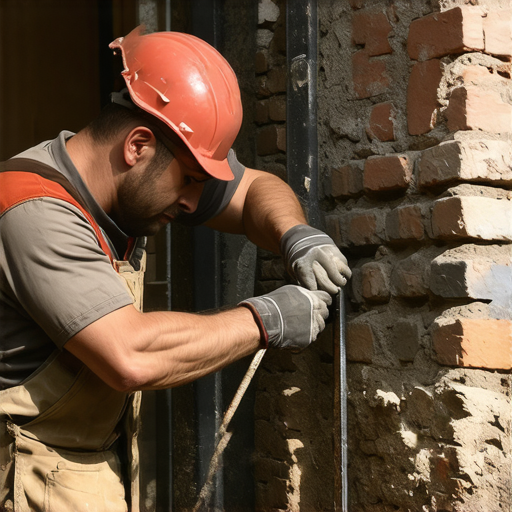
When we perform a historic mortar analysis, we’re looking at more than just color. We use acid digestion to strip the binder, leaving behind the aggregate for microscopic scrutiny. We look for the presence of crushed oyster shells, coal slag, or local river sands that give the original building its character. This isn’t just about ‘Old World’ charm; it’s about mechanical bonding. If the new sand is too round and ‘river-washed,’ it won’t have the ‘tooth’ to grab the brick. It’s like trying to stack marbles—it just won’t hold. We also evaluate the need for specialized foundation waterproofing that doesn’t involve modern membranes which can trap moisture against the stone, leading to sub-florescence—the crystallization of salts beneath the surface that causes stone to crumble like a stale cookie. For 2026, the smart money is on restoration, not replacement. But that requires a mason who knows how to use a hawk and a trowel to butter a joint with the precision of a surgeon, not a ‘lick-and-stick’ artist who thinks a bag of Type S from a big-box store is a universal solution. Protect the masonry, and the masonry will protect the home. Ignore the chemistry, and you’re just building a pile of expensive debris.