3 Proven Fixes for Wobbly Stone Balustrade Restoration in 2026
The Ghost in the Railing: A Forensic Awakening
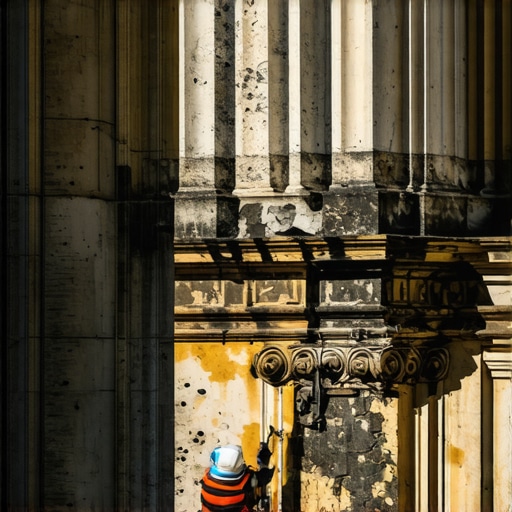
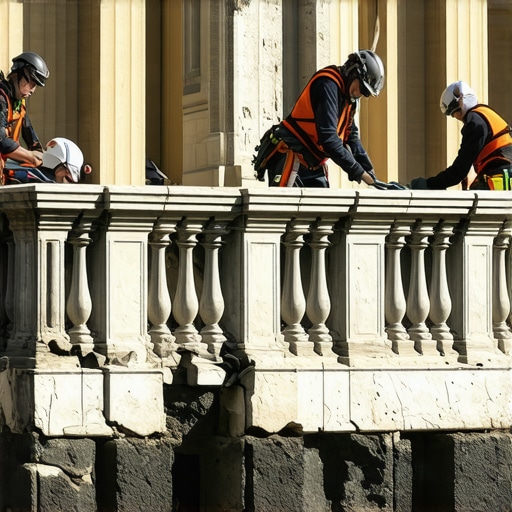
I remember a job back in the late nineties, an old estate where the stone balustrade on the north terrace looked like a row of teeth ready to fall out. My mentor, a man who had more limestone dust in his lungs than oxygen, didn’t look at the cracks. He walked up to the heavy top rail, placed a calloused palm on the stone, and gave it a firm shove. The whole thirty-foot section groaned like a ghost. He looked at me and said, ‘The stone is fine, boy. It’s the heart that’s rotted.’ He was talking about the iron dowels inside, rusted to nothing, expanding as they oxidized and blowing the stone apart from the inside out. That is the reality of masonry damage assessment; what you see on the surface is rarely the whole story.
The Physics of the ‘Wobble’ and Why It Matters
A stone balustrade isn’t just a decorative fence; it is a complex assembly of compression and tension. In a northern climate, these structures are subjected to brutal freeze-thaw cycles. When water penetrates the joints—often through failed tuckpointing weatherproofing—it migrates into the core. Water expands by approximately 9% when it turns to ice. If that water is trapped against a rigid, modern Portland cement mortar, the pressure has nowhere to go but out, resulting in spalling and the dreaded ‘wobbly’ baluster. Modern ‘lick-and-stick’ contractors will just throw some concrete patch over the crack and walk away. But as a forensic mason, I know that’s just putting a shroud on a corpse.
“Water penetration is the single greatest threat to masonry durability.” – BIA Technical Note 7
Fix 1: The Surgical Extraction and Stainless Doweling
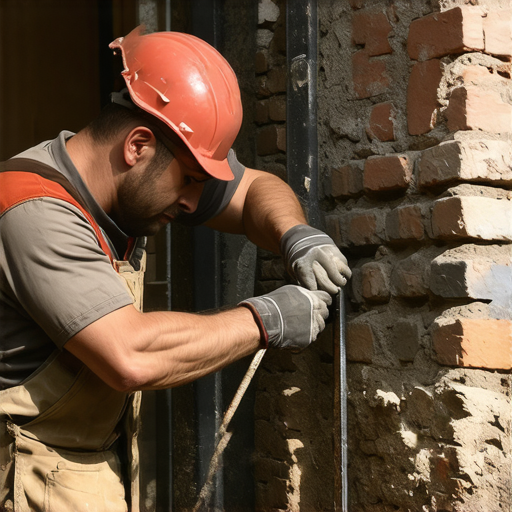
The first and most permanent fix for a wobbly balustrade involves addressing the structural ‘heart.’ If your balusters are moving, the original mild steel or iron pins have likely reached their limit. The restoration process begins by carefully dismantling the top rail using a hawk and small pry bars, ensuring we don’t chip the delicate ‘tooth’ of the stone. We then core out the old, rusted metal. In 2026, the gold standard is 316-grade stainless steel threaded rod set in high-strength, breathable fiber-reinforced mortars. Unlike the iron of old, stainless steel won’t oxidize and expand. When you butter the ends of these rods, you are creating a mechanical bond that will outlast the building itself. We don’t just ‘glue’ it; we engineer it to resist the lateral shear forces of someone leaning against the rail.
Fix 2: Precision Grouting with Fiber-Reinforced Mortars
Sometimes the stone itself has developed internal ‘honeycombing’ or micro-fissures. This is where masonry water damage repair becomes an art form. We use a low-pressure injection system to pump liquid, fiber-reinforced mortars into the voids. These mortars contain microscopic fibers that act like rebar on a molecular level, bridging cracks and restoring the stone’s tensile strength without making it too brittle. This is critical for brick infill panel repair and stone restoration alike. You need a material that has a lower compressive strength than the original stone—the ‘sacrificial principle.’ If the mortar is harder than the stone, the stone will break when the building shifts. This is the ‘Cold Joint’ nightmare that many DIYers create when they use a bag of hardware-store premix.
Fix 3: The Master’s Tuckpointing and Weatherproofing
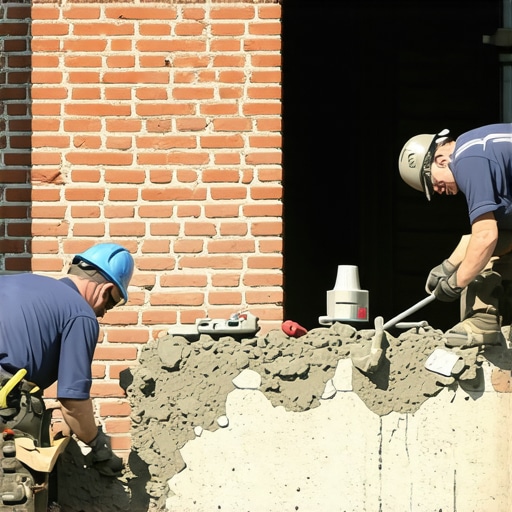
The final line of defense is the joint. I see so many ‘pros’ use a slicker to smash hard cement into a joint and call it tuck pointing services. That’s a recipe for disaster. True restoration requires grinding out the old, failing ‘mud’ to a depth of at least twice the joint width. For a stone balustrade, we often use a Type O or Type N lime-based mortar. This allows the assembly to ‘breathe.’ Moisture needs to be able to escape through the mortar joint, not get trapped behind it. After the mortar has cured to the ‘thumbprint hard’ stage, we finish the joint to match the historic profile—whether it’s a grapevine joint or a weather-struck joint. This isn’t just for looks; it sheds water away from the core. For homeowners looking at tuckpointing tools for DIY, remember that the tool is only as good as the hand holding it. A poorly struck joint is an invitation for the next winter to tear your work apart.
“Restoration of historic masonry requires a mortar that is physically and chemically compatible with the original masonry units.” – ASTM C270 Standard Specification
Beyond the Railing: Foundations and Chimneys
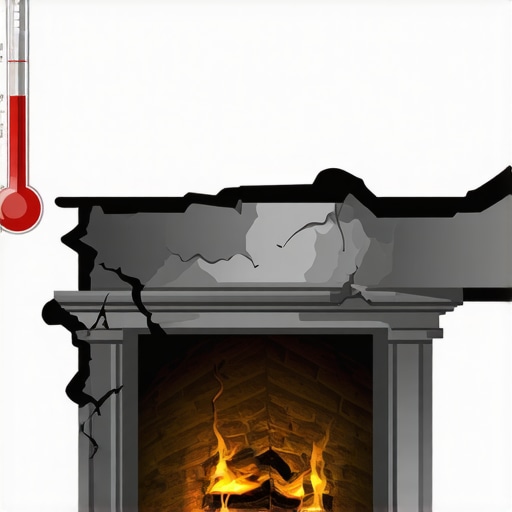
While we are discussing balustrades, a forensic eye never ignores the surrounding context. Often, a wobbly railing is a symptom of a larger foundation crack repair issue or soil settlement. If the porch is sinking, the railing will twist. Similarly, if you are looking at the roofline, don’t ignore the need for chimney damper repair or tuckpointing weatherproofing on the stacks. These elements are all part of the building’s ‘envelope.’ When one part fails, the rest are soon to follow. I’ve seen soldier course bricks over windows fail because a balustrade above was dumping water into the wall cavity for a decade.
The Verdict: Do It Once or Do It Twice
In the world of masonry, there are no shortcuts. You can hire the guy with the lowest bid who uses a concrete patch and a bucket of grey goop, or you can do it the right way. A properly restored stone balustrade should be silent. No groans, no wobbles, no ‘honeycombing’ visible under a scope. It should feel like a single, monolithic piece of the earth. When I finish a job, I don’t just look at the clean lines; I feel the suction of the stone and the density of the mud. That is how you preserve history for another century. If you suspect your stone is failing, don’t wait for the collapse. Get a masonry damage assessment from someone who knows the difference between a pretty facade and a structural failure. In the end, we aren’t just laying stone; we are fighting entropy.