3 Chimney Damper Repair Signs You Can’t Ignore in 2026
The Forensic Scene: When a Hairline Crack Becomes a Structural Grave
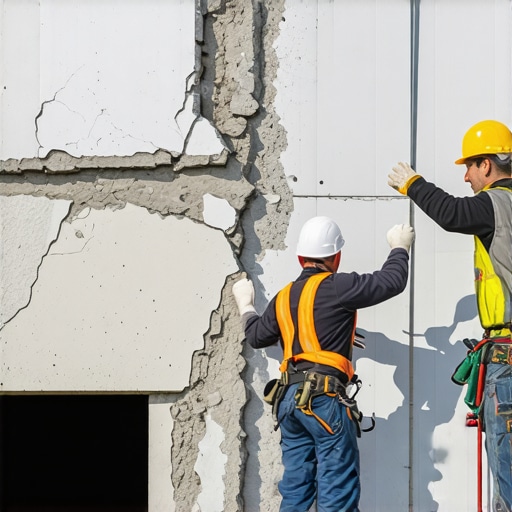
The homeowner told me it was just a hairline crack, a little ‘character line’ running down the shoulder of the chimney. He’d lived with it for five years, ignoring the faint scent of damp soot that lingered after a spring rain. But when I slid my fiber-optic scope inside that throat, the truth was uglier than a cold joint in a rush job. The structural steel lintel, the very bone of the fireplace opening, was rusted to a fine orange dust. It wasn’t just a crack; it was a symptom of a systemic failure of the chimney damper and the surrounding masonry. I’ve seen it a thousand times—men who think a bit of caulk or a cheap concrete patch from a big-box store will stop the relentless march of hydrostatic pressure and thermal expansion. They are wrong. By 2026, the cumulative effects of more extreme freeze-thaw cycles in the North have made these failures faster and more catastrophic.
The Physics of the Flue: Why Your Damper is Failing
To understand why your damper is failing, you have to understand the ‘tooth’ of the masonry and the chemistry of combustion. A chimney is a thermal engine. When you light a fire, the temperature inside the flue jumps from 50 degrees to 600 degrees in minutes. This is thermal shock. In an old-world chimney, the historic masonry preservation techniques allowed for movement. But modern repairs often use mortar that is too hard, lacking the lime content necessary for autogenous healing. When your damper—that cast-iron or stainless steel plate—warps or seizes, it’s rarely just ‘old age.’ It’s usually because the chimney crown repair was neglected, allowing moisture to seep down the throat, mixing with creosote to form a weak sulfuric acid that eats the metal and the mud alike.
“Water penetration is the single greatest threat to masonry durability.” – BIA Technical Note 7
Sign 1: The ‘Gritty’ Flue and Spalling Shoulders
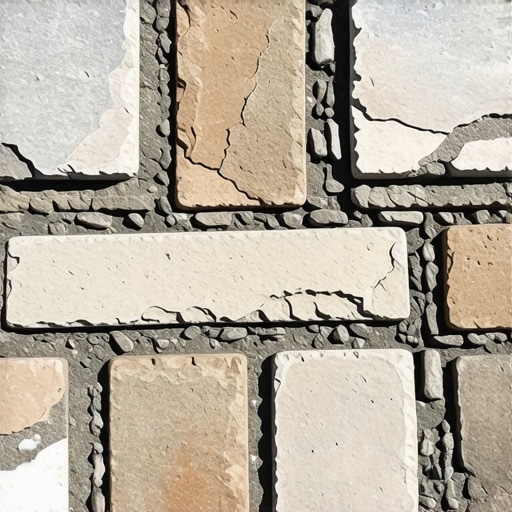
If you reach up to engage your damper and feel a crunching sensation, like you’re grinding glass, you’re looking at the first stage of systemic masonry failure. This isn’t just soot. It’s the face of your interior bricks popping off—a process we call spalling. In our northern climates, water gets trapped behind the brick face. Because water expands 9% when it freezes, it exerts thousands of pounds of pressure. If you’ve used a hard Portland-based mortar for tuckpointing brick walls instead of a softer Type N or O lime-rich mix, the brick has no choice but to explode outward. That grit falls onto the damper blade, scouring the metal and breaking the seal. When I see this, I’m not just looking at a damper; I’m looking for the source of moisture, which usually leads me back to a failing chimney crown. A proper chimney crown repair requires a drip edge and a bond break—concepts ‘handyman specials’ never even consider.
Sign 2: The Rust-Drip and the Death of the Soldier Course
Look at the soldier course—those bricks standing on end above your fireplace opening. If you see white, powdery salt (efflorescence) or orange streaks, your damper is already a casualty of war. This is the result of capillary action. The masonry is ‘wicking’ water from a leak higher up, likely near the roofline where commercial tuckpointing standards are often ignored in residential builds. When that water hits the steel damper, it triggers oxidation. Rust takes up more space than steel. As the damper frame oxidizes, it expands, pushing against the firebricks with enough force to crack the entire throat of the fireplace. This isn’t something a simple concrete patch can fix. You’re looking at a structural intervention. We often see this in commercial smokestack repair as well, where the sheer scale of the masonry makes the expansion forces even more terrifying.
Sign 3: The Stuck Blade and Thermal Bridging
By 2026, we are seeing more ‘tight’ homes where airflow is critical. If your damper won’t open or close fully, you aren’t just losing heat; you’re risking carbon monoxide backdrafting. Often, the blade is stuck because the fire-rated masonry installation was done without proper expansion joints. In the heat of a fire, everything expands. If the mortar is ‘buttering’ the damper frame too tightly with no room to breathe, the metal buckles. This is why sustainable block cutting and modular masonry construction require precision. You cannot just slap ‘mud’ on a hawk and hope for the best. You need to understand the ‘suction’ of the brick—how much water it will pull out of the mortar—before you set that frame. If the mortar ‘flashes’ (dries too fast), it won’t bond, creating a gap where heat can bypass the damper and bake the structural wood framing behind the masonry.
“The use of mortar which is stronger than the masonry units can lead to stress concentrations that cause cracking and spalling of the units themselves.” – ASTM C270 Standard Specification for Mortar
Beyond the Damper: Failing Retaining Wall Repair and Soil Logic
Often, a chimney issue is a symptom of a larger site problem. I’ve been called out for a ‘damper repair’ only to find the entire house is tilting because of a failing retaining wall repair nearby. If your retaining wall isn’t managing hydrostatic pressure, that water finds a new path—often right into your chimney’s foundation. This is where we move from being masons to being forensic investigators. We look at the soil heaving. We look at whether the base was compacted to 95% Proctor density or if it was just tossed in. Whether it’s commercial tuckpointing on a high-rise or a simple fireplace in a bungalow, the physics remain the same: you must manage the water, or the water will manage you.
The Master Mason’s Verdict: Do It Once or Do It Twice
I’ve spent my life with a slicker in one hand and a hawk in the other, and I can tell you this: there are no shortcuts in masonry. If you ignore these three signs in 2026, you won’t just be replacing a $500 damper; you’ll be rebuilding a $15,000 chimney stack. When you hire someone, ask them about the ‘sacrificial principle’ of mortar. Ask them how they handle thermal expansion in modular masonry construction. If they look at you like you’re speaking Greek, show them the door. You want the man who understands the chemistry of the lime, the grit of the sand, and the uncompromising laws of gravity. Don’t settle for a ‘lick-and-stick’ fix. Build it to last a century, or don’t build it at all.